
What is the Circadian Rhythm and how can it affect well-being?


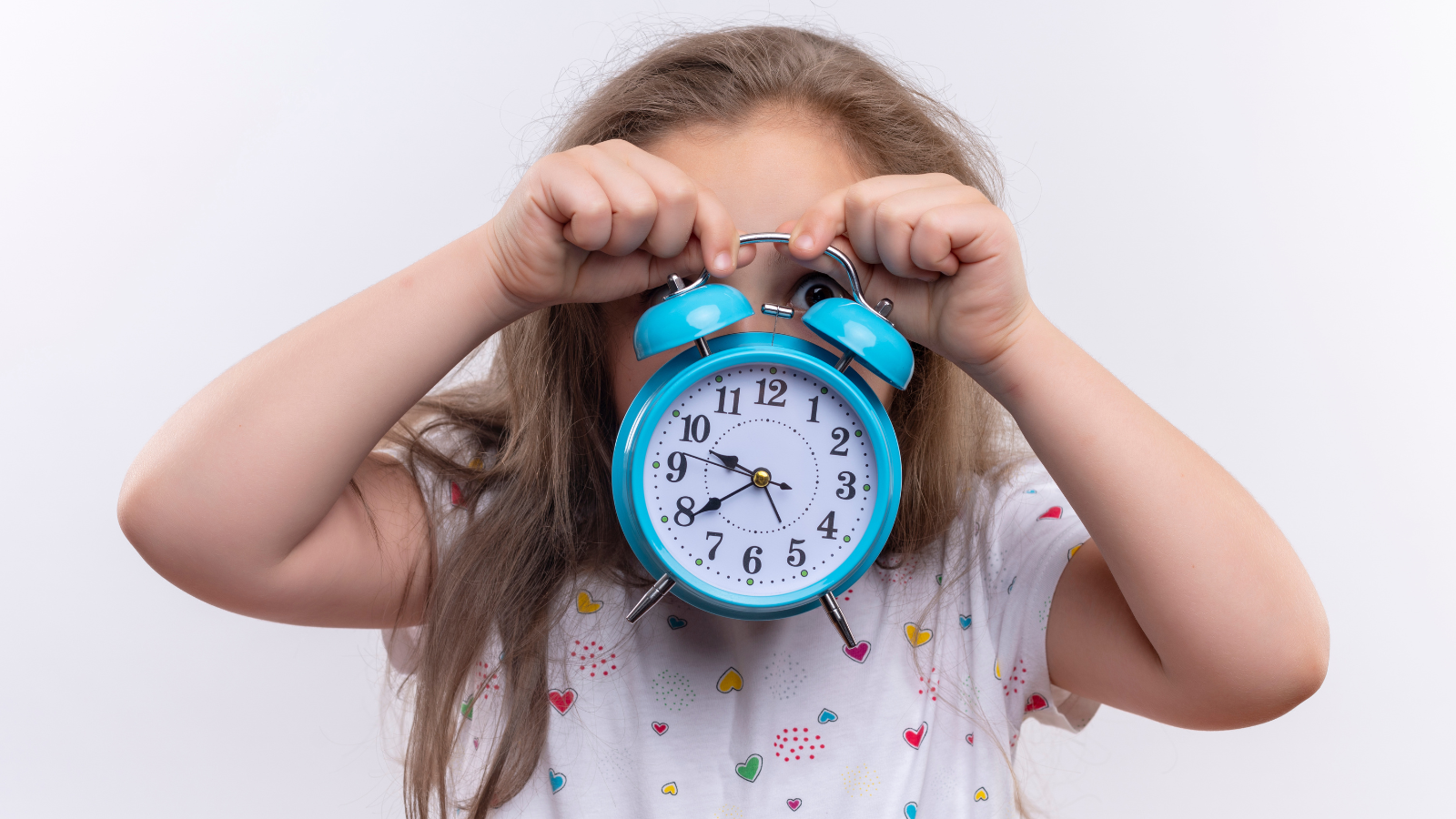
Have you ever thought about how our body realizes that it is time to wake up, sleep or eat? The answer is simple and it is precisely... in our cerebellum! 🧠
Circadian Rhythm is a kind of internal “biological clock”, responsible for the basic needs of the human being and ensuring that the body works in harmony.
Throughout this article, we explain concretely what the Circadian Rhythm is, how it works, what is its relationship with brain waves and we also share some tips on how to regulate and adjust it!
What is the Circadian Rhythm and how does it work?
The Circadian Rhythm controls the functioning and needs of the body throughout the 24 hours of the day. This cycle, although it can be adjusted by external stimuli, such as natural light, works even without changes in the environment.
This is important because it ensures that basic functions of our body (such as sleep, hunger and the regulation of body temperature) occur at the right time. Thus, the Circadian Rhythm:
- Is in charge of sleep-wake cycle, that is, it is responsible for making us feel sleepy or more awake;
- Controls the release of important hormones such as Melatonin and Cortisol which, respectively, make us sleepy and help us wake up.
- Regulates body temperature throughout the cycle;
- Influences how the body spends energy throughout the day;
- Control of appetite.
Where is the “Biological Clock” located?
Our “Biological Clock” or Circadian Cycle is controlled by a very specific part of the brain: hypothalamus. It is “synchronized” according to what the body perceives from the outside, such as light ☀️ (to wake up) or the absence of it 🌙 (to sleep).
How does the circadian sleep cycle work?
Understanding that the Circadian Cycle controls sleep-wake states and hormone release, we were able to conclude that:
🔸During the day, when there is light, there is greater release of cortisol, which transmits directly to the brain that it is time to wake up and be ready to perform different tasks.
🔹 On the other hand, during the night, there is less light and a greater release of melatonin, which the brain interprets as a signal to rest and recharge energies!
It is here that a fundamental link arises with brain waves! Throughout the day, brain wave activity varies, reflecting the different states we experience (when we are awake, relaxed, or asleep!) 👇
Circadian Cycle and Brain Waves
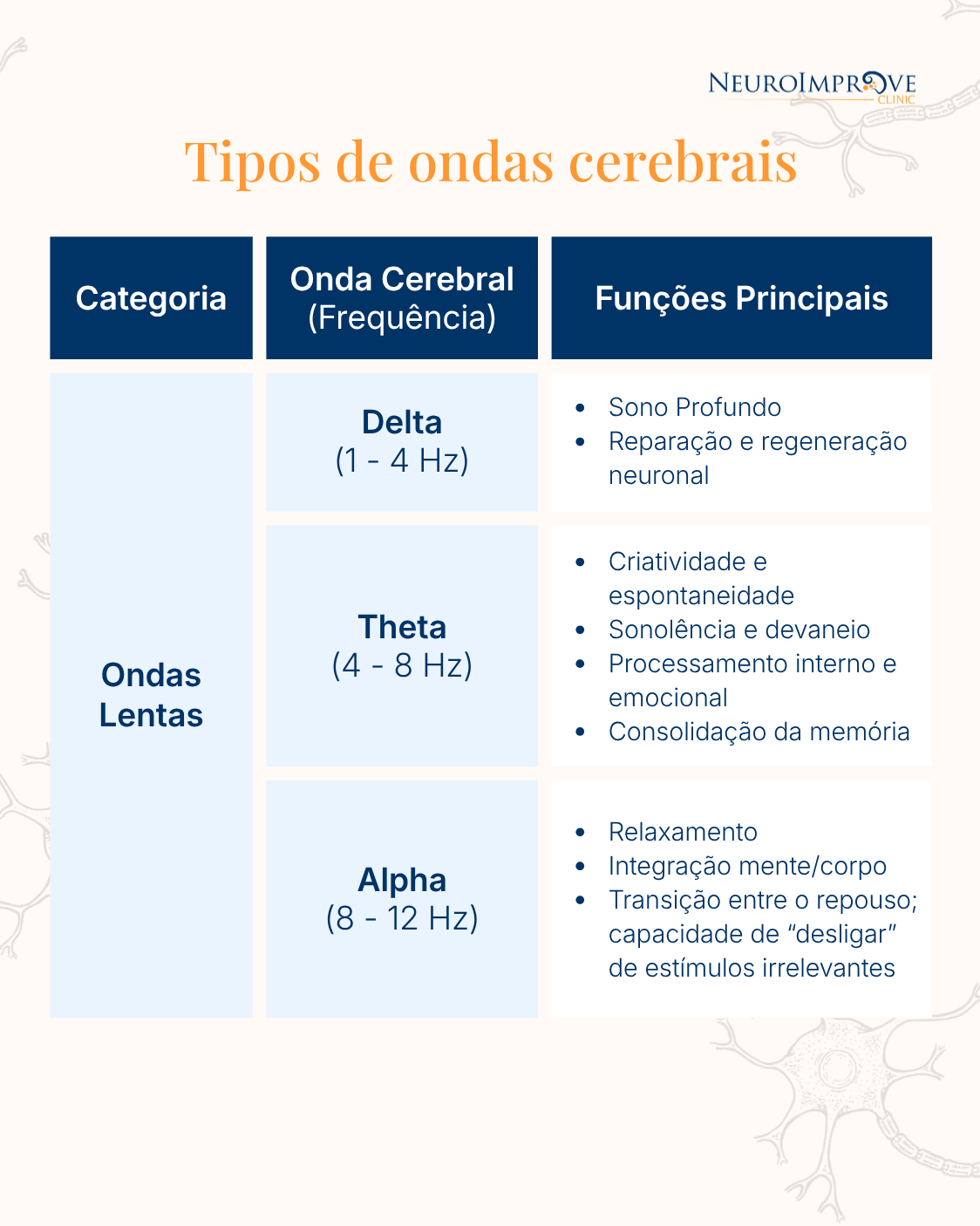
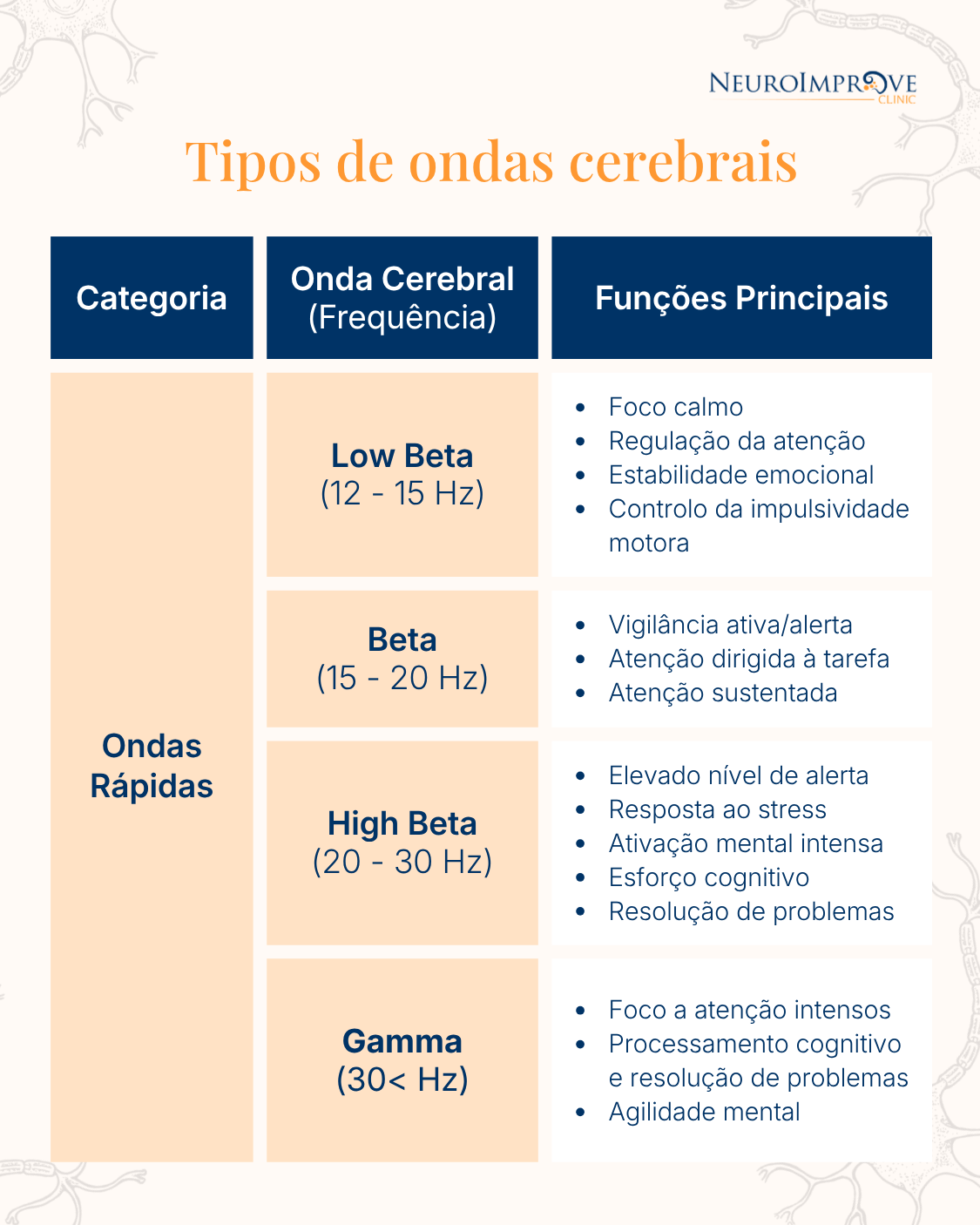
There are different types of brain waves such as Delta, Theta, Alpha (slow waves), Low Beta, Beta, High Beta and Gamma (fast waves).
Throughout the 24 hours of the day, the brain works at different rates, adjusting according to the Circadian Cycle.
So:
- During the day, the brain is faster and more active and, therefore, there is a predominance of waves:
- Beta: associated with the focus, thinking and carrying out activities/tasks;
- Alpha: when we are more relaxed, but still awake.
👉 Here, cortisol levels are higher, maintaining the state of alert.
- At the end of the day, when fatigue and sleepiness set in, the brain slows down and melatonin levels increase. Here:
- There is a an increase in Theta waves (linked to sleepiness and daydreaming) and a decrease in Alpha waves (linked to more conscious relaxation/wakefulness).
- During sleep there is a predominance of waves:
- Delta: associated with deep sleep;
- Theta: linked to lighter sleep.
Here, there is also a mixed activity in the stage of dreams (REM sleep), between Theta waves and fast waves that indicate that, despite the state of sleep, the brain is active.
What is a Circadian Profile?
Every person has a Circadian Cycle profile. In other words, there is an individual pattern by which the body is governed.
In this way, there are 3 different profiles:
🌄 Morning (or Gallics): those who wake up early and are more productive in the morning.
🌃 Nights (or owls): are more productive at night.
⚖️ Intermediates: a balance of the previous two.
→ Did you knew that studies indicate a predominance of the night profile for both adults and children with ADHD (Attention Deficit Hyperactivity Disorder)? 🤔 This explains the prevalence of approximately 80% of cases of insomnia in this population!
How to regulate the circadian cycle?
If you feel that your sleep is not very restorative, that you have persistent changes in humor, fluctuations in appetite, as well as difficulty falling asleep or remembering, it may be a sign that you need to regulate your circadian cycle.
But how can we do that? Follow the tips we have prepared for you!
1) Maintain a consistent routine, including sleep and meal schedules
Having a troubled routine, with meals at irregular times and hours of rest outside of what is recommended, can help destabilize the “biological clock” and directly interfere with well-being.
Normally, it is recommended that the sleep period starts between 10:00 and 11:00 pm and lasts for 8 hours.
2) Avoid energy drinks, caffeine or screen lights before going to bed
Energy drinks, caffeine and scroll before going to bed can directly interfere with the quality of sleep, rest and the ease (or difficulty) of falling asleep and/or waking up.
3) Seek sun exposure in the morning (when possible)
As we have seen, natural light increases cortisol levels, helps the brain wake up and gives an extra boost to face the rest of the day!
4) Try to exercise!
Physical activity helps to awaken the brain and reduces the stress that often interferes with sleep.
5) Create a relaxation routine
Creating small relaxing habits before bedtime can help ease falling asleep and promote the quality of rest.
You may choose to read a book, listen to relaxing music, take a warm bath or even breathing exercises, such as diaphragmatic breathing.
The importance of qEEG and Neurofeedback
Through a Quantitative Eletroencephalogram (qEEG) it is possible to measure and analyze the activity of different brain waves.
In this way, when the brain is in balance, it is expected to present adequate levels of the waves that keep us awake and alert during the day.
However, in one inappropriate rhythm three patterns can arise:
- Insomnia/Fatigue: an excess of brain waves associated with sleep and tiredness (Theta and Alpha), which translate a poor quality of sleep and continuous tiredness.
- Hyperactivation: deficits in relaxation waves (Alpha) and excess of fast waves (Beta and High Beta), which are reflected in constant agitation, but at the same time fatigue and difficulty in resting.
- Unrestful sleep: deficit in slow waves (Delta, Theta and Alpha), but especially in Delta and Theta, which indicate that the person sleeps all night, but that he feels tired even so.
🧠 So, Neurofeedback can be an extremely useful therapy to help the brain correct these dysregulations and promote greater brain balance. That is, a better quality of sleep, a more effective rest and more controlled alert states.
Final Considerations
✅ The Circadian Rhythm functions as a Biological Clock and it is essential for our well-being and quality of life.
✅ The Circadian Rhythm is in charge of sleep-wake cycle and the control: of the release of hormones, body temperature, appetite and energy that the body spends throughout the day;
✅ This Biological Clock is controlled by hypothalamus and is “synchronized” according to what the body perceives from the outside, such as light (or the absence of it).
✅ Throughout the 24 hours of the day, the brain works at different rhythms (reflected in its brain activity), adjusting according to the Circadian Cycle.
✅ Everyone has an individual Circadian Cycle, being possible to identify 3 types of profile.
✅ Poor sleep, mood and appetite swings, as well as difficulty falling asleep and remembering, may indicate a need to regulate the Circadian Cycle.
✅ Through the qEEG it is possible to analyze the activity of brain waves and understand if the brain is in a normal/adequate pattern or if there are deviations in brain activity.
✅ With Neurofeedback it is possible to help the brain to correct these dysregulations and achieve a greater balance.
References
Bear, M., F., Connors, B., W., Paradiso, M., A. (2020). Neuroscience: Exploring the Brain, Enhanced Edition. Jones and Bartlett Publishers, Inc.
Demos, J., N. (2005). Getting Started with Neurofeedback. W.W. Norton & Company.
Kalat, J., W. (2023). Biological Psychology, International Edition (14h Edition). Cenpage.
Lee, Y., Field, J., & Sehgal, A. (2021). Circadian Rhythms, Disease and Chronotherapy. Journal of Biological Rhythms, 36, 503 — 531. https://doi.org/10.1177/07487304211044301
Luu, B., Fabiano, N. (2025). ADHD as a circadian rhythm disorder: Evidence and implications for chronotherapy. Frontiers in Psychiatry. 16:1697900. https://doi.org/10.3389/fpsyt.2025.1697900
Montaruli, A., Castelli, L., Mulé, A., Scurati, R., Esposito, F., Galasso, L., & Roveda, E. (2021). Biological Rhythm and Chronotype: New Perspectives in Health. Biomolecules, 11. https://doi.org/10.3390/biom11040487
Patke, A., Young, M. W., Axelrod, S. (2020). Molecular mechanisms and physiological importance of circadian rhythms. Nature reviews. Molecular cell biology, 21 (2), 67—84. https://doi.org/10.1038/s41580-019-0179-2
Related Content


O cérebro fala.
Nós ouvimos.
Schedule an appointment and see how we can help.
No time for a call now? Leave your details and we will get in touch:

Wonderful team, concerned, attentive and always available to help in everything.
With the passage of time, the results are being verified.
I am grateful to have met Neuroimprove and all its professionals.