
Anxiety in Children
For children who find it hard to relax... Let’s work together to develop a more positive mindset!

What is Childhood Anxiety?
Anxiety disorders in childhood or adolescence refer to persistent worries or fears that go beyond what would be expected for the child’s age or stage of development.
If left unaddressed, these difficulties can affect a child’s emotional wellbeing, academic performance and even the way they relate to others.
It is important to remember that anxiety is a natural emotion and part of human nature. However, in some cases, it can become more intense or difficult to manage — and it is precisely at such times that it may be helpful to seek specialist support.
Main types of Anxiety Disorder in Children
The symptoms of anxiety can manifest slightly differently in children and adolescents:

Anxiety Disorders in Children
- Separation anxiety: crying, clinging and refusing to go to school all morning.
- Selective Mutism: talking non-stop at home but not saying a word in the classroom or at the doctor’s.
- Specific phobias: a dog in the distance, a thunderstorm or the thought of an injection trigger a full-blown panic attack.
- Social anxiety: knows the answer but never puts their hand up for fear of getting it wrong in front of their classmates.
- Generalised anxiety: worries if their parents are five minutes late and has already imagined the worst-case scenario.

Anxiety Disorders in Adolescents
- Social anxiety: an oral presentation, a training session or a party cause distress days in advance.
- Generalized anxiety: sleeps poorly, is constantly irritable and worries about grades, the future and what others think of them.
- Panic disorder: has had a panic attack that frightened them and now lives in fear of having another one.
- Agoraphobia: avoids the underground, the shopping centre or any crowded place for fear of not being able to leave.
- Specific phobias: heights, aeroplanes, blood or injections are situations avoided at all costs.
- Health-related anxiety: looks up symptoms online and convinces themselves that they always have something serious.
Symptoms of Anxiety in Children
Emotional and behavioral symptoms:
- Constant worries or excessive fears (even for no apparent reason)
- Intense fear of separation from parents or carers
- Frequent refusal to take part in social activities
- Constant need for reassurance (“what if…?” “are you really coming back?”, “are you sure?”)
- Irritability or tantrums for no apparent reason
- Difficulty concentrating or making decisions
- Avoiding specific situations or places (darkness, crowds, doctors, etc.)
.avif)
Physical symptoms:
- Frequent stomach aches or nausea
- Recurrent headaches
- Muscle tension
- Difficulty falling asleep or restless sleep
- Excessive tiredness
- Rapid breathing, tremors or a feeling of shortness of breath during times of stress
💡 If any of these situations sound familiar… we’re here to help!
Causes of Anxiety in Children
Anxiety in childhood or adolescence has various causes and results from the interaction between:
- Biological factors: genetics, a more sensitive temperament, changes in neurotransmitter regulation;
- Psychological factors: perfectionism, low self-esteem, a history of trauma or difficulty in coping with stress;
- Social/environmental factors: overprotective or critical parenting styles, family conflicts, bullying, changes at school or in daily routines.
In children, it often manifests as separation anxiety and insecurity, whilst in adolescents it tends to be more closely linked to academic and social pressures, concerns about self-image, and the impact of social media.
Diagnosis of Anxiety in Children
The diagnosis of anxiety must be made by a specialist (psychologist, psychiatrist, paediatrician, amongst others) and is based on a comprehensive clinical assessment, which may include interviews, questionnaires and psychological tests.
At NeuroImprove, we also use Quantitative Electroencephalography (qEEG), a complementary test that enables a more accurate diagnosis and, consequently, more effective treatment.
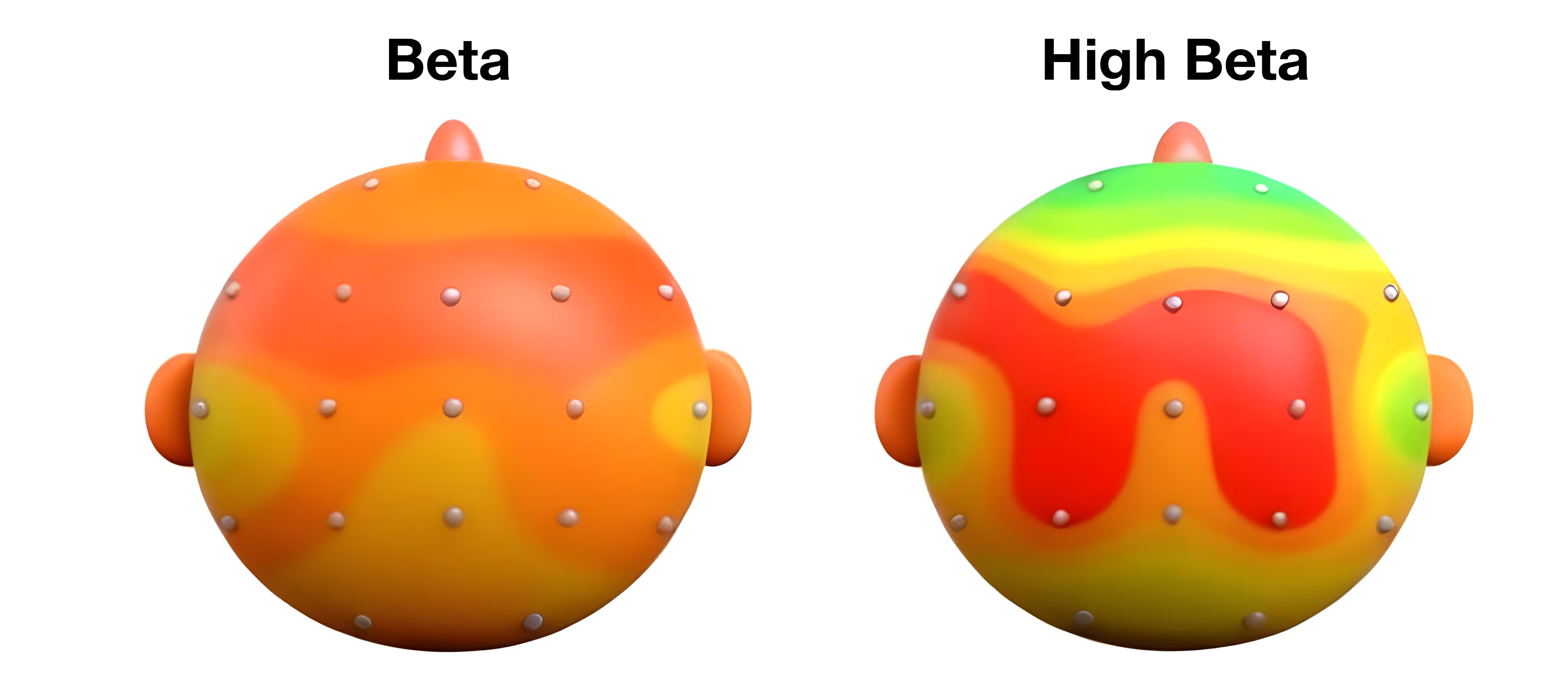
In qEEG, anxiety is frequently associated with:
🧠 Increased activity in the beta and high-beta wave bands
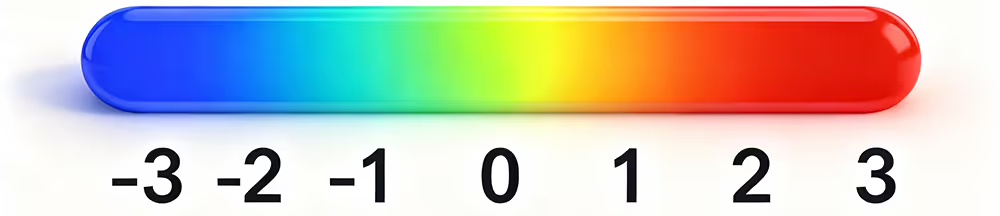
A brain map similar to the following is therefore usually observed:

Combined ADHD
As the name suggests, this involves a combination of the symptoms seen in the other two subtypes: inattentive and hyperactive-impulsive.




Combined ADHD
As the name suggests, this involves a combination of the symptoms seen in the other two subtypes: inattentive and hyperactive-impulsive.
Values below expected
Values above expected
Treatment of Childhood Anxiety
The treatment of childhood anxiety should be tailored to the individual and adapted to the child’s stage of life, taking into account their age group and their family, school and social context.
At NeuroImprove, we take an integrated approach:
Neurofeedback
The child knows what they need to do, but the brain simply doesn't cooperate. Neurofeedback specifically trains this ability, non-invasively and without medication. Learn more

Cognitive-Behavioral Therapy
By addressing thoughts, feelings, and behaviors, we teach the child to cope with frustrations more effectively. Learn more

Family Involvement
What works in a session must also work at home. That's why we work with you to ensure the treatment results are maintained in your child's daily life.

Involvement of Other Professionals
When the child requires more than one perspective, we coordinate with the school and other healthcare professionals so that everyone is working towards the same goals.
👉 Do you want to know in detail how we work?

What other families are saying
.avif)
.avif)

.avif)

My daughter had a lot of anxiety that was even affecting her at school level but thanks to this treatment she improved immensely. This would be very noticeable in school and it does not seem the same. I recommend.

I really liked the accompaniment. What we want to improve is always taken into account and affects us the most. I am a completely different person, much calmer and more focused. Neurofeedback makes all the difference! I strongly advise those who manage to get green for this type of treatment

I liked it from the care to the treatment, my son is 8 years old suffers from anxiety and has attention deficit. With the help of neurofeedback you can already control your anxiety, you are calmer and more confident and your attention has improved a lot.

We are having an excellent experience. In a few sessions and you can already notice results. Great professionals and very welcoming, both at the reception and therapists. Thank you

I found a friend at the NeuroImprove Clinic when I was already desperate because all the doors were closing for my son. Today he is a teenager with friends and a super normal life, and with a very strong self-esteem. This achievement of mine is due to this magnificent clinic that has a team of excellent professionals.

Fantastic clinic and team and always looking for agenda solutions and helping the children in this case my daughter. I highly recommend coming to Porto from Lisbon because the confidence is maximum and the support, the professionalism of the teams, the way they explain the progress of the sessions can only give improvements..

It's been a very positive experience. Although there are not many sessions yet, we have already noticed differences in our son. We always give feedback in all sessions and we have the opportunity to follow the results with the evaluations made before, during and after the program. Thank you all, they are an excellent team. Catia Lopes

An excellent follow-up with results that exceeded my expectations in my child's Hyperactivity.

I noticed a lot of differences in my son, namely in his behavior, more in relation to me, that we were with authority problems, but thank goodness he has corrected! And if I eventually need treatment again, this is where I will go for sure! Many thanks to the whole team always ready to help, and Dra. Beatriz for all the support and affection given throughout our journey! Thank you all at NeuroImprove 🙏❤️


We Train Brains, Strengthen Minds, Transform Lives
Schedule an appointment and see how we can help.
No time for a call now? Leave your details and we will get in touch:

Wonderful team, concerned, attentive and always available to help in everything.
With the passage of time, the results are being verified.
I am grateful to have met Neuroimprove and all its professionals.