
When Anxiety Becomes a Problem


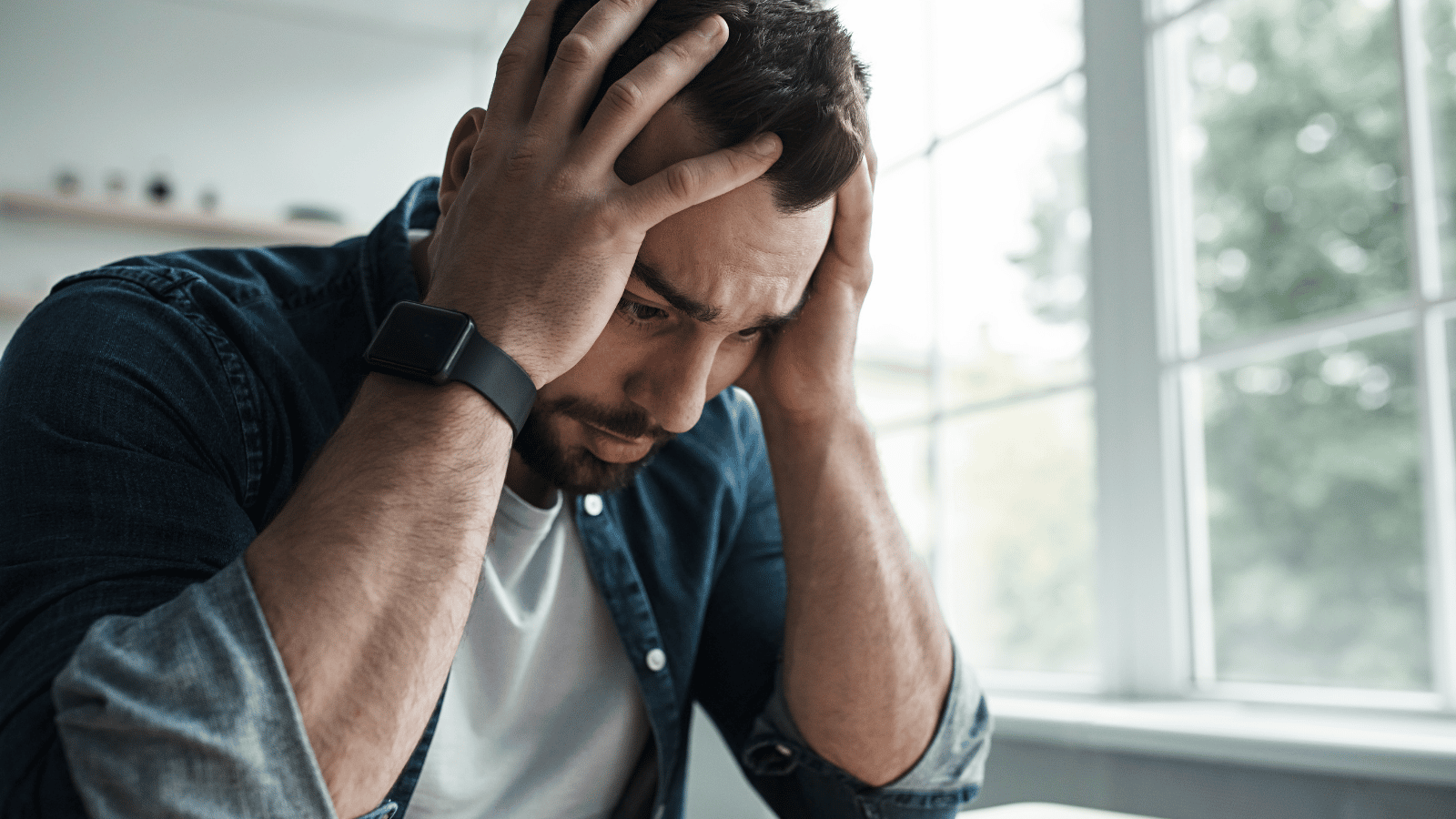
We have all felt anxiety at some point. It is part of the human experience, whether you are a child or an adult, and it does not necessarily have to be a negative thing.
In fact, it can motivate us to take action, achieve goals, or complete daily tasks (such as public speaking, meeting deadlines, taking exams, etc.), but it also serves as a warning for demanding or dangerous situations.
But when does anxiety actually become a problem? 😥
When we are exposed to high levels of stress for long periods, it can harm our mental and emotional health and overall well-being. In other words, when something that should be temporary takes on a significant negative weight in our lives and becomes difficult to control or put an end to.
Throughout this article, we will address specific questions such as: what is the purpose of anxiety, what signs indicate the need for attention, what it feels like to have an anxiety attack, what the most common types of disorders are, as well as ways to calm down and intervene.
What is the purpose of anxiety?
As we have seen, anxiety, when at healthy levels, is useful and important for daily life. It is a natural response that allows us to:
🔸 Identify potential dangers or threats.
🔸 React more quickly to those situations.
🔸 Protect ourselves from risky situations.
🔸 Potentially promote better performance.
Feeling anxious does not necessarily mean you have a disorder, but we should pay attention and be careful when it becomes excessive, persistent, or difficult to control and starts to cause distress or interfere with daily functioning.
When does anxiety become a problem?
It becomes a concern when the symptoms interfere with an individual's normal functioning. In other words, we should pay attention when it:
🔹 Arises with intensity;
🔹 Is persistent and difficult to control;
🔹 Interferes with daily life or causes significant distress;
🔹 Becomes uncontrollable;
🔹 Interferes with day-to-day tasks, including the simplest ones;
🔹 Leads to isolation by withdrawing from friends and family;
🔹 Prevents you from leaving the house;
🔹 Causes intense emotional distress;
🔹 Is disproportionate to the threat or situation, given the context.
We can distinguish between adaptive anxiety, which helps us respond to challenges, and clinically significant anxiety, which is excessive, persistent, or disproportionate and causes distress or interferes with daily life.
In the latter case, it may be important to consider consulting a mental health professional to understand its origin and help reduce its impact.
What does an anxiety attack feel like?
The term “anxiety attack” is often used to describe an episode of intense anxiety. When symptoms appear suddenly and reach a peak of intensity, it may be a panic attack. These are common episodes where you may experience manifestations such as:
🔸 Rapid heartbeat and breathing;
🔸 Tremors;
🔸 Sweating;
🔸 Chest pain or tightness;
🔸 Shortness of breath;
🔸 Dizziness;
🔸 Palpitations;
🔸 Tingling sensations.
What is chronic anxiety?
The term “chronic anxiety” is often used to describe anxiety symptoms that persist or recur over a prolonged period. Depending on the characteristics of the symptoms, it may be associated with different anxiety disorders. Prolonged exposure to stress and anxiety can be associated with sleep disturbances, muscle tension, gastrointestinal symptoms, fatigue, and other physical manifestations. Persistent anxiety can also significantly affect quality of life and daily functioning.
Professional intervention becomes urgent here, so that the individual, with the appropriate guidance, can reduce this burden on their body and mind and regain balance, stability, and well-being.
What are the anxiety disorders?
Pathological anxiety (excessive and harmful) can lead to the development of disorders that require specialized attention and support. Here are some of the common types of anxiety disorders ⬇️:
Generalized Anxiety Disorder
This consists of excessive, uncontrollable, and constant worry regarding different areas of life (work, relationships, health, the future, etc.) or specific events.
Social Anxiety Disorder
This consists of intense fear or anxiety regarding social or performance situations where the individual may be observed or evaluated by others.
Panic Disorder
This consists of the occurrence of recurrent and unexpected panic attacks, sometimes accompanied by persistent worry about having further attacks or behavioral changes to avoid them.
Agoraphobia
This consists of the fear of being in situations or places where it might be difficult to escape or where help might not be available if incapacitating or panic-like symptoms occur.
How to calm anxiety?
Reducing the impact of anxiety is a process that takes time. There are habits and strategies that can be positive to implement into your routine and can help during difficult moments.
Tips for managing anxiety
🔹 Breathing exercises: Techniques such as diaphragmatic breathing shift the focus to the present moment, helping to reduce the physiological arousal associated with anxiety and promote a greater sense of calm.
🔹 Grounding: Grounding is a strategy that helps direct your attention to the present moment and concrete environmental stimuli, which can reduce engagement with intrusive thoughts and worries.
🔹 Physical activity: Helps relieve restlessness and muscle tension while distracting the mind from negative thoughts.
🔹 Hobbies: Focusing on enjoyable activities can help push away negative thoughts, worries, and anxious feelings.
🔹 Maintaining a routine: Setting a schedule and keeping up with personal and household hygiene helps create a sense of order that can lighten the burden of daily anxiety.
🔹 Reduce stimulant drinks: Caffeine and energy drinks increase heart rate and restlessness.
🔹 Allow for rest: It is important to balance activity and rest, ensuring periods of physical and mental recovery.
It is important to note that these strategies are useful in specific situations and are not a substitute for the diagnosis and clinical follow-up required in the case of an anxiety disorder ⚠️.
How to treat Anxiety
The first step is to ask for help. Having symptoms does not necessarily mean you have a disorder, but it may be important to seek evaluation and support from a specialized professional.
🧠 At NeuroImprove Clinic, we help children and adults with the challenges of anxiety every day:
👉 Through an analysis with qEEG (Quantitative Electroencephalogram), which allows us to analyze brain activity patterns that may be associated with your symptoms. Based on the results, a personalized Neurofeedback protocol is defined to help promote the brain's ability to self-regulate.
👉 Through support from Clinical Psychology using CBT (Cognitive Behavioral Therapy), which addresses thought patterns, behaviors, and emotions, equipping the client with strategies and skills to handle challenges with more calm and control.
We have a team of professionals available to listen, support, and guide you from the very first contact. Know that you don't have to face anxiety alone. We are here to help. 🧡💙
📖 If you would like to learn more about this topic, watch our webinar:
Final Thoughts
✅ Anxiety is a natural response, and at healthy levels, it is useful and important for daily life.
✅ Anxiety becomes a concern when symptoms interfere with an individual's normal functioning.
✅ An anxiety attack is an intense and debilitating reaction that can occur without warning.
✅ Chronic anxiety occurs when pathological (excessive and harmful) anxiety persists over time.
✅ Pathological (excessive and harmful) anxiety can lead to the development of conditions such as Generalized Anxiety Disorder, Social Anxiety Disorder, Panic Disorder, and Agoraphobia.
✅ It is possible to reduce the impact of anxiety by implementing healthy habits and strategies; however, this does not replace professional diagnosis and support.
✅ At NeuroImprove, through Neurofeedback and Clinical Psychology, we can help clients reduce the impact of anxiety on their daily lives and handle challenges with greater calm and control.
References
Bonevski, D., & Naumovska, A. (2019). Panic Attacks and Panic Disorder. Psychopathology - An International and Interdisciplinary Perspective. https://doi.org/10.5772/intechopen.86898
Chavanne, A., Robinson, O. (2020). The overlapping neurobiology of induced and pathological anxiety: a meta-analysis of functional neural activation. The American journal of psychiatry, 178, 156 - 164. https://doi.org/10.1176/appi.ajp.2020.19111153
Cheng, B., Zhou, Y., Chen, F. (2023). You've got mail! How work e-mail activity helps anxious workers enhance performance outcomes. Journal of Vocational Behavior. https://doi.org/10.1016/j.jvb.2023.103881
Montemayor, M. (2024). Understanding the link between anxiety disorders and physical health. Journal of Clinical Psychiatry and Cognitive Psychology, 8(1), 168.
Palagini, L., Miniati, M., Caruso, V., Alfi, G., Geoffroy, P. A., Domschke, K., Riemann, D., Gemignani, A., Pini, S. (2024). Insomnia, anxiety and related disorders: A systematic review on clinical and therapeutic perspective with potential mechanisms underlying their complex link. Neuroscience Applied, 3, 103936. https://doi.org/10.1016/j.nsa.2024.103936
Salali, G. D., Uysal, M. S., Bevan, A. (2021). Adaptive function and correlates of anxiety during a pandemic. Evolution, Medicine, and Public Health. 393 - 405. https://doi.org/10.1093/emph/eoab037
Szuhany, K. L., Simon, N. M. (2022). Anxiety Disorders: A Review.. JAMA, 328 24, 2431-2445 . https://doi.org/10.1001/jama.2022.22744
Related Content


We Train Brains, Strengthen Minds, Transform Lives
Schedule an appointment and see how we can help.
No time for a call now? Leave your details and we will get in touch:

Wonderful team, concerned, attentive and always available to help in everything.
With the passage of time, the results are being verified.
I am grateful to have met Neuroimprove and all its professionals.