
Invisible marks that last forever: the reality of a victim of bullying


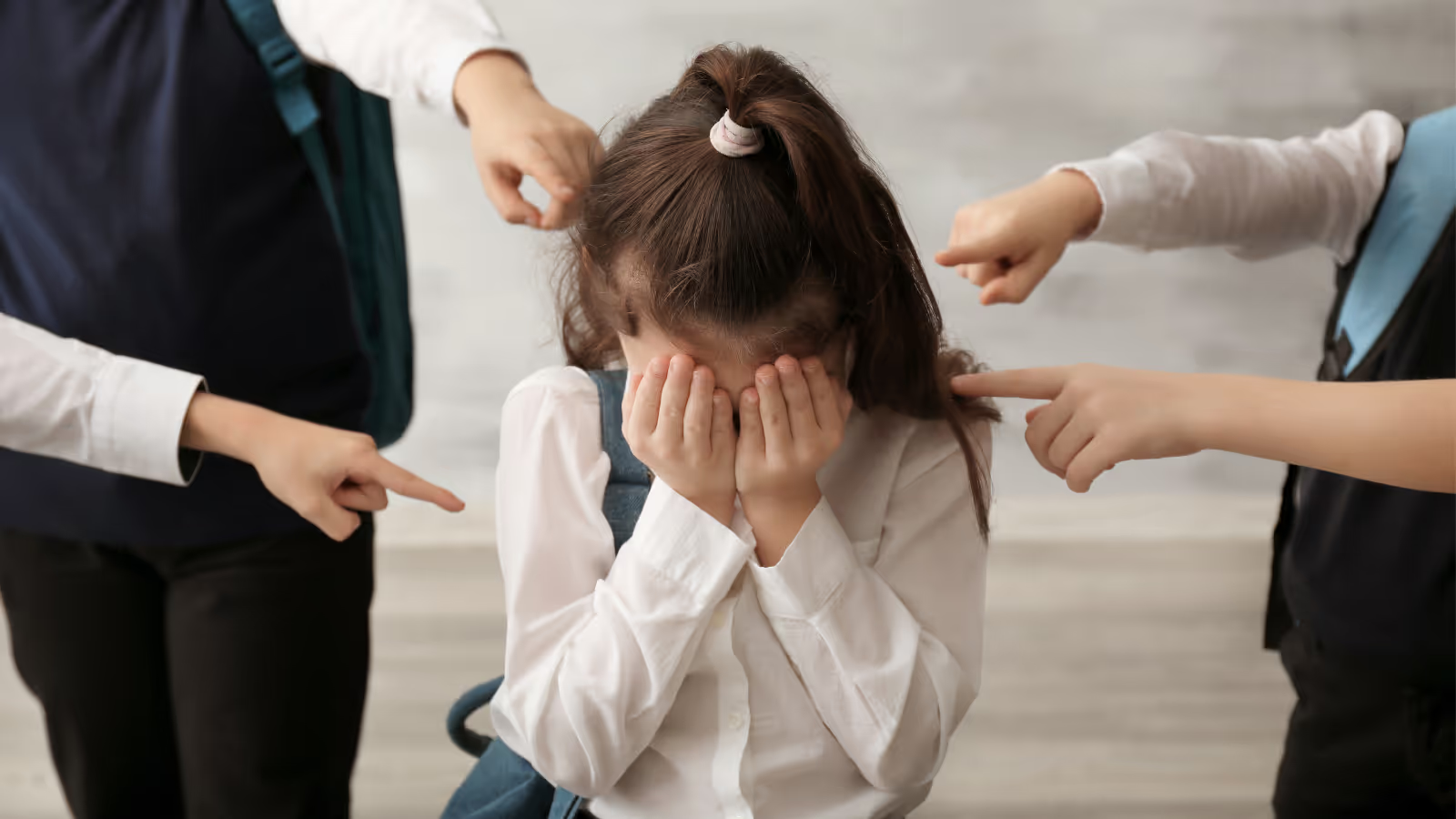
O 20 October-World Day to Combat Bullying - reminds us of the sad reality for many children and adolescents around the world.
📩 In Portugal, it is estimated that almost 6% of students between 11 and 18 years old, claim to have already been victims of bullying.
This may seem a distant reality because, in fact, a victim of bullying tends to suffer in silence with fear and/or fear of asking for help, even statistics claim that more than 60% of the victimsdo not report the bully
Therefore, part of the intervention and prevention involves:
- Address the topic in schools and explain the concept of bullying;
- Raise awareness about the different forms of bullying that exist;
- Explain what to do in such a situation - as a victim or as a witness.
What is Bullying?
To understand bullying we have to understand the concept in its entirety. In this way, bullying consists of Aggressive practices(physical, verbal or psychological) intentionally and consistently with the intention of hurting, humiliating another individual.
Although it is mainly associated with the school environment, bullying can happen outside of that environment. It can even occur among adults in social and/or work contexts.
What are the different types of bullying that exist?
It is common for people to associate bullying with physical violence, however, it is much more comprehensive than that.
There are several forms of bullying that can mark the victim for the rest of his life:
- Psychological Bullying:Constant attacks at self-esteemof the person. Ignoring, manipulating, belittling and/or blackmailing.
- Physical bullying:Physical assaults such as hitting, pulling, kicking, pushing and/or kicking.
- Verbal Bullying:Threats, insults, humiliations, provocations, offensive and/or discriminatory pranks.
- Bullying social:Exclusion of groups (at school, work and/or social environment), spreading gossip or lies about the person, encouraging other individuals to ignore or mistreat the victim.
- Sexual Bullying:Intimidation, humiliation, aggression and/or harassment of a sexual nature including undesired/non-consensual touches.
- Homophobic/transphobic bullying:Discrimination of the victim based on their sexual orientation and/or gender identity.
- Cyberbullying: Insulting, threatening, spreading rumors or lies about the victim in the online environment and creating fake profiles of the victim on social networks.

What are the psychological effects of bullying on victims?
Although each victim reacts differently, bullying leaves psychological marksoften more painful than physical injuries, affecting the growth and development of children and adolescents.
Children and adolescents who suffer from bullying, often face psychological consequences, as:
🔸 Emotional Distancing
🔸 Mutilation
🔸 Suicidal behaviors
🔸 Use of illicit substances
🔸 Alcohol and tobacco consumption
🔸 Isolation
🔸 Low self-esteem
E physical consequences, such as:
🔹 Physical pain (head, stomach, back, etc.)
🔹 Tiredness
🔹 Lack of appetite
🔹 Dizziness
🔹 Tiredness and difficulty in sleep
The consequences of bullying are determined by factors such asfrequency, and severityand the type of bullying.
Therefore, our role as adults is to be constantly alert for signs such as: black nodes, injuries, behavioral and/or mood changes, poor school results, refusal to go to school, physical complaints, etc.
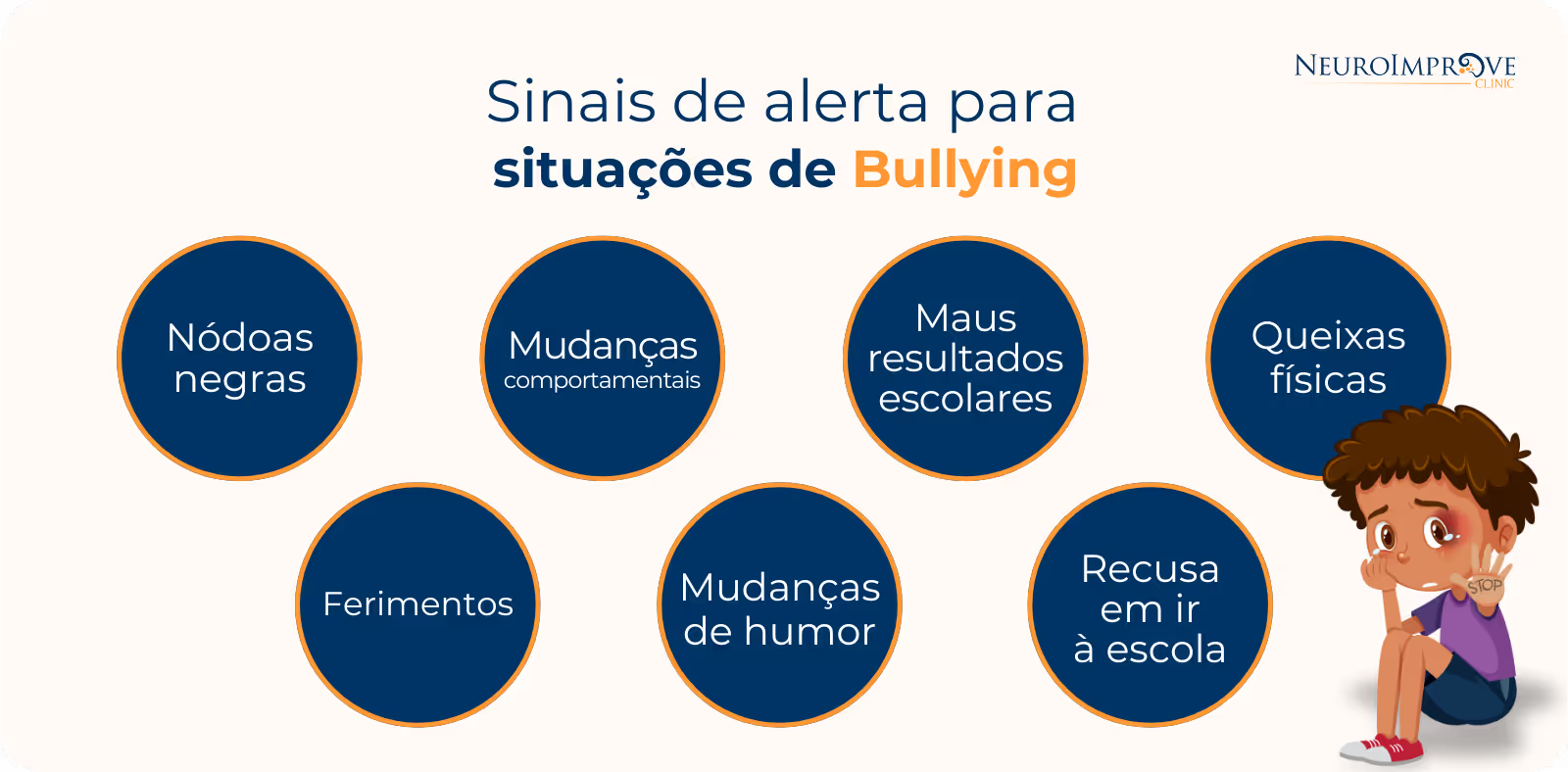
When identifying any of these signs, it is essential to offer help and availability for the child or adolescent to speak openly about the subject.
Who can witness bullying?
Everyone can witness bullying, including colleagues, friends, teachers, family members, caregivers or parents. Anyone who witnesses a situation of physical or psychological violence is considered a witness.
In this way, in the face of bullying, we must act. Ignoring or observing will not help the victim, so our duty is to offer immediate support, trying, if possible, to remove her from the situation or complain to an adultso that it can intervene as soon as possible.
I am a victim of bullying. What should I do?
If you are a victim of bullying, it is important seek helpas soon as possible. Choosing someone you trust to talk about the situation should be the first step. You should not feel fear, shame or guilt about what you are going through, nor should you keep that suffering to yourself. Violence cannot be normalised, nor can it be accepted under any circumstances.
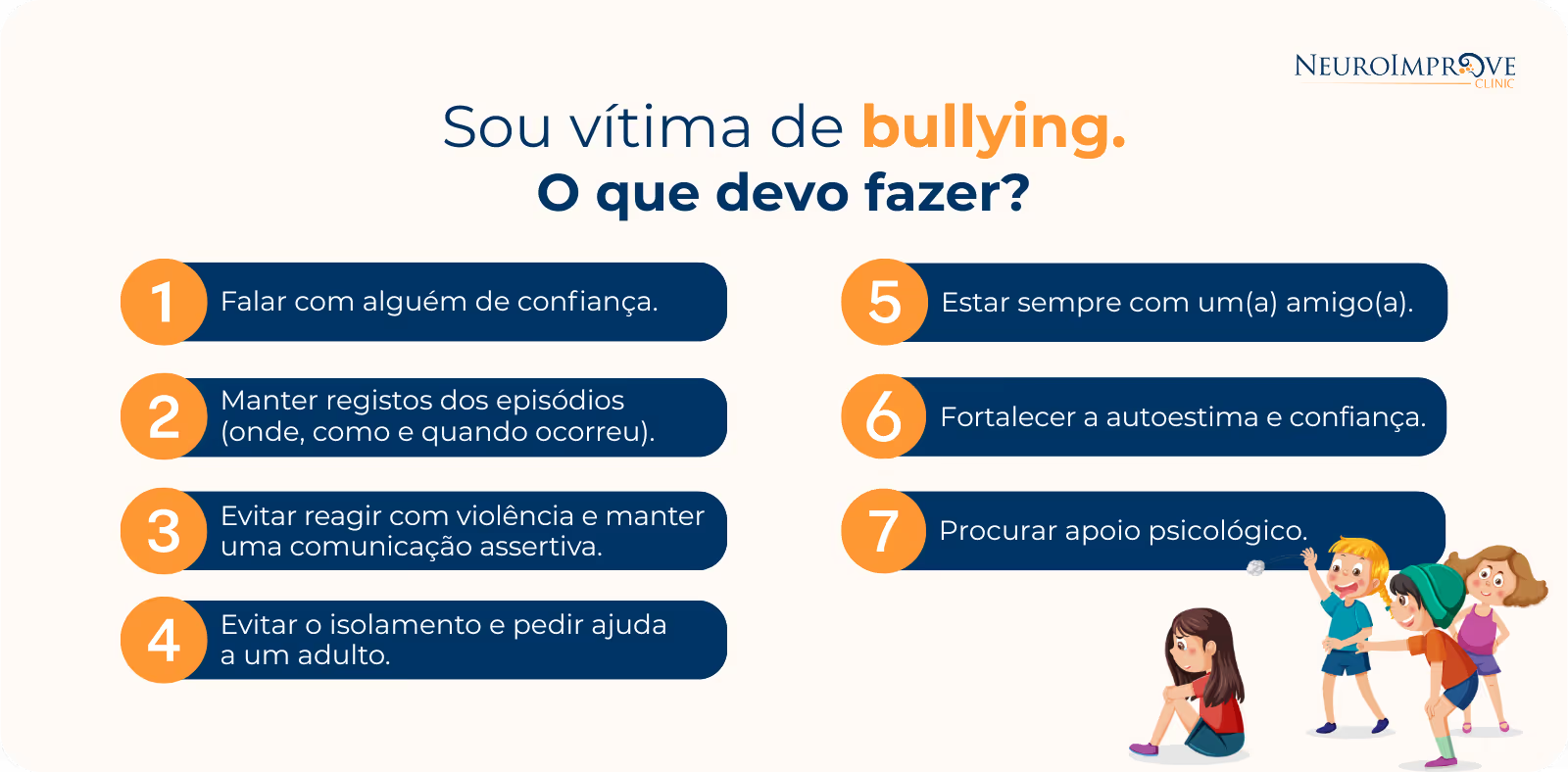
In addition to exposing the situation to someone you trust, you should:
- Keeping records of bullying episodes
Record the location (s) of occurrence (s), including how and when it occurred.
If it is a case of cyberbullying, it is important to keep photographic records of the messages/comments that can serve as evidence.
- Avoid reacting violently and maintain assertive communication
It is normal to feel the need to resolve the conflict on the spot or to respond “in the same currency”, but it is important to avoid it at all costs.
Reacting violently can make the situation worse. Therefore, it is important to remain calm and opt for assertive communication saying “I do not accept that you do this to me” OR get away from the situation as much as possible.
- Avoid isolation and ask for help from an adult!
In the school environment and in a danger/conflict situation, look for a person with authority - an assistant, educator or teacher. He or she will know how to intervene and help in the best possible way.
It is important that noif you isolate and simply accept the behavior of the bully.
- Always be with a friend
Being accompanied by a friend can make us feel safer! A company in the intervals or on the way to home/school can ward off bullying situations.
- Strengthen self-esteem and confidence
Victims of bullying often have low self-esteem, a negative view of themselves or feel weaker than the bully. In these moments, you must recognize your own qualities, strengths, achievements and avoid comparing yourself to third parties.
Every person is special and different, and we should not be judged or mistreated for who we are!
- Seek psychological support
Bullying is a serious situation that leaves marks for life. Talk openly with a psychologistcan help us deal with this situation more calmly and consciously. He will know how to support us and give us the necessary tools to help overcome the emotional pain resulting from this situation - avoiding serious repercussions in the future.
How to avoid bullying
Statisticspoint out that one in three children in the world is a victim of bullying.
Bullying cannot be seen as a normal phase of childhood/adolescence. Any form of violence must be reprimanded and therefore, avoiding bullying begins precisely by educating the youngest by perpetuating values such as: respect for one's neighbour, empathy and equality.
🗣️ As parents, we can promote daily dialogue with the child and encourage the sharing of the most positive and negative moments of their day. This can help identify possible bullying episodes.
There are professionals and associations available to support victims of bullying and fight against the appearance of these cases in Portugal. If you are a victim or know a victim of bullying, it is important to act. You will never be alone.
Final Considerations
👉 Bullying is oneform of violencewhich includes aggressive, intentional and repeated behaviors.
👉 In Portugal, almost 6% of students,aged between 11 and 18, they claim to have already been victims of bullying.
👉 60%of the victims do not report the bully.
👉 It's not just physical aggression, There are many forms of bullying.
👉 Bullying leaves physical and psychological marks which affect the growth and development of children and adolescents.
👉 Everyone can be witnesses, enough witness.
👉 If you are a victim of bullying, you should ask for helpto someone as quickly as possible - an adult, a friend, a family member.
👉 If you are a victim of bullying should not feel shame, fear, fear or guiltbecause you are experiencing this situation. Any kind of violence must be condemned.
👉 Bullying prevention starts with education of the youngestperpetuating values such as: respect for one's neighbor, empathy and equality.
References
Armitage, R. (2021). Bullying in children: impact on child health. BMJ Paediatrics Open, 5. https://doi.org/10.1136/bmjpo-2020-000939.
Oliveira., M. (2025). Almost 6% of young people say they have already been a victim of bullying in a national survey. https://www.publico.pt/2025/02/24/sociedade/noticia/quase-6-jovens-ja-vitima-bullying-inquerito-nacional-2123609
Order of Psychologists. Let's talk about bullying. https://www.ordemdospsicologos.pt/ficheiros/documentos/opp_vamosfalarsobrebullying_documento.pdf
SNS 24. (2025). Prevention of bullying. https://www.sns24.gov.pt/pt/tema/prevencao-e-cuidados-de-saude/prevencao-do-bullying/
Related Content


We Train Brains, Strengthen Minds, Transform Lives
Schedule an appointment and see how we can help.
No time for a call now? Leave your details and we will get in touch:

Wonderful team, concerned, attentive and always available to help in everything.
With the passage of time, the results are being verified.
I am grateful to have met Neuroimprove and all its professionals.