
Does anxiety in pregnancy harm the baby? Understand what the risks are and how to act.



A pregnancyis a unique, special phase and a real milestone in a woman's life! A new chapter begins, all life changes and the focus ceases to be only on oneself to expand to the new life that is being generated.
As in all moments of great change, it is natural for worries and fears to arise - and pregnancy is no exception. Be it for your process, for childbirth and even for the future. 🤰
👉 However, a warning sign arises when these worries and fears cease to be passengers and become persistent, affecting the well-being of the mother and consequently the development of the baby.
In this article, we will talk about the extent to which pregnancy anxietycan be harmful, what its causes, how to reduce symptoms and forms of intervention.
What is anxiety in pregnancy?
Pregnancy is a complex and extremely important process for all future mothers. For this reason, it is characterized by fluctuations in the levels of anxiety, mainly in the first and third trimesters due to concerns about abortion and the experience of childbirth, respectively.
Studies confirm that pregnancy is, in fact, a process ofmany transformationswhich require adaptation by the mother, namely:
🔹 by changes in the body;
🔹 for real or hypothetical situations that may occur during the period of gestation and childbirth;
🔹 because of the expectations around the new roles that arise with motherhood and around the baby - and which imply a restructuring in the family and social sphere.
This adaptation can often prove difficult at different levels (psychological, physical and mental) and create the perfect conditions for the development of anxiety in pregnancy.
What are the common symptoms of anxiety in pregnancy?
The gestation period is a totally unique experience for every woman. However, when we talk about anxiety in pregnancy, there are signs that deserve special attention.
Bones symptomsPsychologists go through:
🔸 Concern about the health of the baby
🔸 Fear of childbirth and possible complications in labor
🔸 Fears about lifestyle changes
🔸 Balance between work, personal life and motherhood
🔸 Irritability
And there are also physical symptoms, such as:
🔸 Palpitations
🔸 Shortness of breath
🔸 Tension
🔸 Nausea and vomiting
🔸 Feeling tired and tired
🔸 Concern
🔸 Tremors
The presence of these symptoms, for long periods of time, affects not only the mother but also the baby himself, which may result in below-normal weight, premature births and developmental delays.
By identifying these symptoms, it is crucial to seek the guidance of a professionalof health to indicate the next steps. After all, for a healthy pregnancy, it is essential to have regular contact with these professionals and share any symptoms that arise - even those that may seem, at first glance, “normal”.
What are the causes of anxiety in pregnancy?
Lack of social and family support, bad experiences of a previous pregnancy and the presence of other psychological disorders (such as depression, bipolarity, PHD, among others) are factors that favor its development.
Additionally, a study involving 150 pregnant women pointed out Top 10 factorslinked to anxiety in pregnancy. Let's see in the following image:
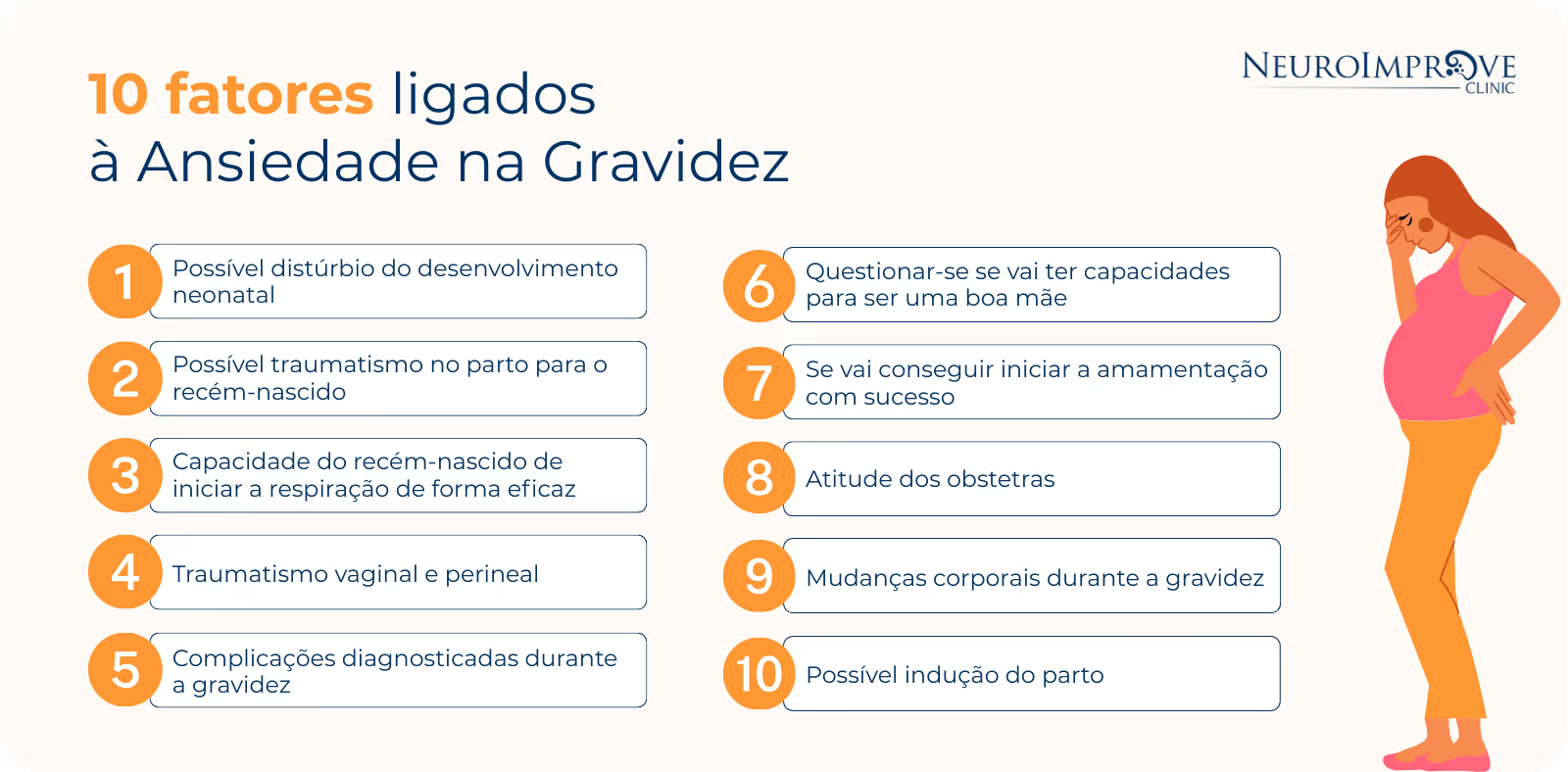
In addition to these, there are other factors that can also contribute to the excessive worry and anxious thoughts of many mothers. However, in these intense moments full of doubts, anguish or fear, it is essential to resort to strategies to be able to find calm again.
How to calm anxiety in pregnancy?
As we have seen throughout the article, the fears and fears of the pregnancy process (and motherhood itself) can be overwhelming and difficult to deal with, interfering with the physical, emotional and mental well-being of the pregnant woman.
For this reason, it is important to look for ways to ward off these negative thoughts and feelings through Effective techniques and strategies.
Studies point to some practices such as:
🔹 Yoga 🧘 ♀️
🔹 Music therapy 🎵
🔹 Massage 💆 ♀️
In addition, interventions such as:
🔹TherapyCognitive-Behavioral, which makes it possible to replace disruptive thoughts, feelings and behaviors with rational thoughts.
🔹Interactive Lectures or Support Groupswhich promote knowledge about motherhood and pregnancy and clarify uncertainties about their process and childbirth.
In other words, the educational aspect can help reduce levels of concern.
What to take for anxiety in pregnancy
With anxiety in pregnancy, it is natural that the need arises to look for ways to relieve symptoms and reduce excessive fears and worries.
⚠️ However, it is essential that do not start, change or stop any medicationwithout the indication/recommendation of a doctor. 💊❌
Even for natural ingredients (such as teas), there must also be special care in which a professional opinion should be sought.
How can we intervene in anxiety in pregnancy?
It is normal for doubts, fears and uncertainties to arise. However, if you feel that thesetake note of you and your mind, you should seek professional help.
This support can make all the difference and make the pregnancy journey a more beautiful, healthy, calm and rational process.
At NeuroImprove we apply rigorous approaches to challenges and obstacles in all areas and contexts of life. Our approach goes through:
- peel Psychology- first line of treatment for anxiety in pregnancy.
- hair Neurofeedback- that promotes healthier brain activity patterns. 🧠
Pregnancy anxiety and postpartum depression: how are they related?
Anxiety in pregnancy and postpartum depression They may be relatedand there are studies that speak exactly about that. ✅
📈 Data that looked at pregnancy concern and the risk of postpartum depression point out that women with high levels of worry have 4x more chances of developing postpartum depressionthan those with low or moderate levels.
In other words, women who feel high levels of worry, as is often the case with anxiety, are more likely to develop postpartum depression. In this way, medical monitoring, both physical and psychological, becomes essential in this phase.
Final Considerations
Pregnancy is a special milestone in the lives of many women and, for this reason, several worries and fears end up arising that, when excessive, can harm the mother and the baby itself.
This is a period of transformations, intense emotions and above all expectations, so it is normal to feel some anxiety and concern in the process. This does not mean that they are failing in the role as a mother, on the contrary, it demonstrates the importance and affection for this new chapter. 👩 🍼🍼
⚠️ However, if you feel that these worries and concerns trap your day to day and affect you physically, it is important to investigate and contact a professional.
Taking care of the emotional is also taking care of the baby and with professional support and the right strategies it is possible to live this phase with more confidence and tranquility.
References
Conde, A., Figueiredo, B. (2003). Anxiety in pregnancy: risk factors and implications for maternal health and well-being. Clinical Psychiatry. 24:3, pp. 197-209. https://hdl.handle.net/1822/4217
Deklava, L., Lubina, K., Circenis, K., Silver, V., & Millere, I. (2015). Causes of anxiety during pregnancy. Procedia - Social and Behavioral Sciences, 205, 623—626. https://doi.org/10.1016/j.sbspro.2015.09.097
Domínguez-Solís, E., Lima-Serrano, M., & Lima-Rodríguez, J. S. (2021). Non-pharmacological interventions to reduce anxiety in pregnancy, labour and postpartum: A systematic review. Midwifery, 102, 103126. https://doi.org/10.1016/j.midw.2021.103126
Grigoriadis, S., Graves, L., Peer, M., Mamisashvili, L., Tomlinson, G., Vigod, S. N., Dennis, C. L., Steiner, M., Brown, C., Cheung, A., Dawson, H., Rector, N. A., Guenette, M., & Richter, M. (2018). Maternal Anxiety During Pregnancy and the Association with Adverse Perinatal Outcomes: Systematic Review and Meta-Analysis. The Journal of clinical psychiatry, 79 (5), 17r12011. https://doi.org/10.4088/JCP.17r12011
Jalal, S. M., Alsebeiy, S. H., & Alshealah, N. MR. J. (2024). Stress, Anxiety, and Depression During Pregnancy: A Survey Among Antenatal Women Attending Primary Health Centers. Healthcare (Basel, Switzerland), 12 (22), 2227. https://doi.org/10.3390/healthcare12222227
Osborne, L. M., Voegtline, K., Standeven, L. R., Sundel, B., Pangtey, M., Hantsoo, L., & Payne, J. L. (2021). High worry in pregnancy predicts postpartum depression. Journal of affective disorders, 294, 701—706. https://doi.org/10.1016/j.jad.2021.07.009
Salehi, F., Pourasghar, M., Khalilian, A., & Shahhosseini, Z. (2016). Comparison of group cognitive behavioral therapy and interactive lectures in reducing anxiety during pregnancy: A quasi-experimental trial. Medicine, 95 (43), e5224. https://doi.org/10.1097/MD.0000000000005224
Vázquez-Lara, M. D., Ruger-Navarrete, A., Mohamed-Abdel-Lah, S., Gómez-Urquiza, J. L., Fernández-Carrasco, F. J., Rodríguez-Diaz, L., Caparros-González, R. A., Palomo-Gomez, R., Riesco-Gonzalez, F. J., & Vázquez-Lara, J. MR. (2025). The Impact of Mindfulness Programs on Anxiety, Depression and Stress During Pregnancy: A Systematic Review and Meta-Analysis. Healthcare, 13 (12), 1378. https://doi.org/10.3390/healthcare13121378
Related Content


We Train Brains, Strengthen Minds, Transform Lives
Schedule an appointment and see how we can help.
No time for a call now? Leave your details and we will get in touch:

Wonderful team, concerned, attentive and always available to help in everything.
With the passage of time, the results are being verified.
I am grateful to have met Neuroimprove and all its professionals.