
Feeling tired? Find out how insomnia can impact your well-being.



Have you ever felt that you have a poor sleep quality?
That, during the day, you often feel tired and even so, your nights are spent blank with difficulty falling asleep and a little restful sleep? 😞
Insomnia seem harmless, but the truth is that they can cause enormous wear and tear and in the medium/long term causeserious problems in health and well-being. 🫀
Throughout this article we will talk a little about: what are insomnia, what are the symptoms, causes, how to prevent and intervene in the face of this disorder.
What are Insomnia?
Insomnia is onesleep disturbancerelated to difficulty falling asleep and maintaining a deep, restful sleep.
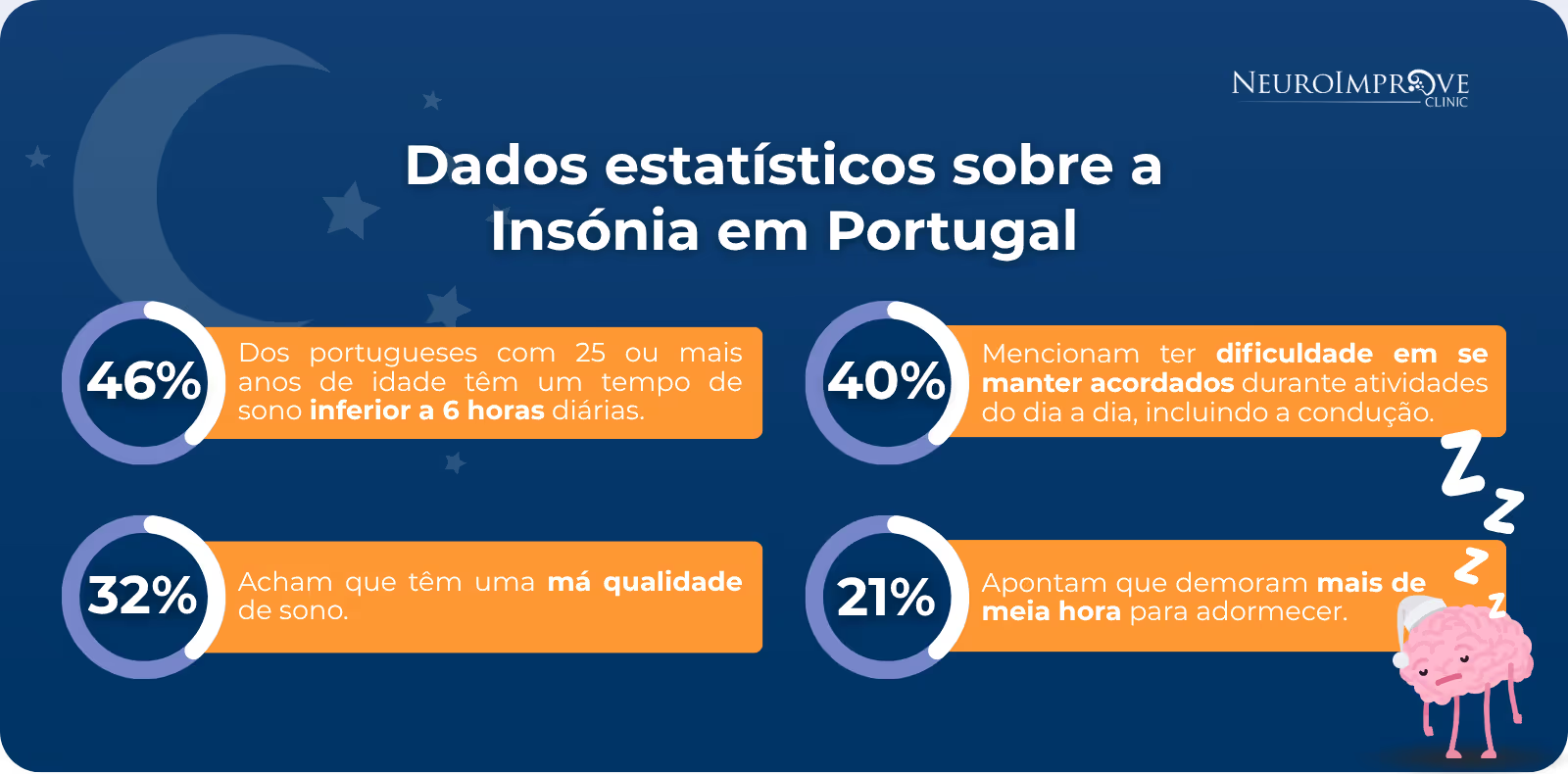
📊 Statistical data ofPortuguese Society of Pneumology e da Portuguese Society of Occupational Medicine point out that:
This disturbance directly affects the quality of lifeof the individual in the long term, causes functional changes in the day to day (and can even affect performance at work) and can be developed by several factors, which we will explore next.
What are the most common symptoms in Insomnia?
At some point, we have all gone through phases in which we felt difficulty falling asleep, that the quality of sleep was of poor quality, not very restorative and that fatigue was present. In fact, it is normal for it to happen for short periods of time, whether by routine or personal life events.
However, when we are facing Insomnia Disorders, these symptoms persist and remain for long periods, being:
🔹 Difficulty falling asleep and finding a comfortable sleeping position.
🔹 Physical, mental fatigue and drowsiness during the day.
🔹 Difficulty sleeping and maintaining a deep sleep for long periods of time.
🔹 Nightmare them.
🔹 Difficulty remembering.
🔹 Dysregulated sleep patterns and cycles.
🔹 Bruxism (tooth ranger during sleep).
🔹 Difficulty feeling rested, even after several hours of sleep.
🔹 Irritability and anxiety.
Insomnia is not just about difficulty falling asleep or sleeping well. It is a serious conditionwhich brings significant consequences, opening doors to serious problems for general health.
A study published in Journal of Sleep Lêkolîntells us that Insomnia increases the risks for:
➡️ Cardiovascular diseases
➡️ Obesity
➡️ Diabetes
➡️ Depression
➡️ Anxiety
Types of Insomnia
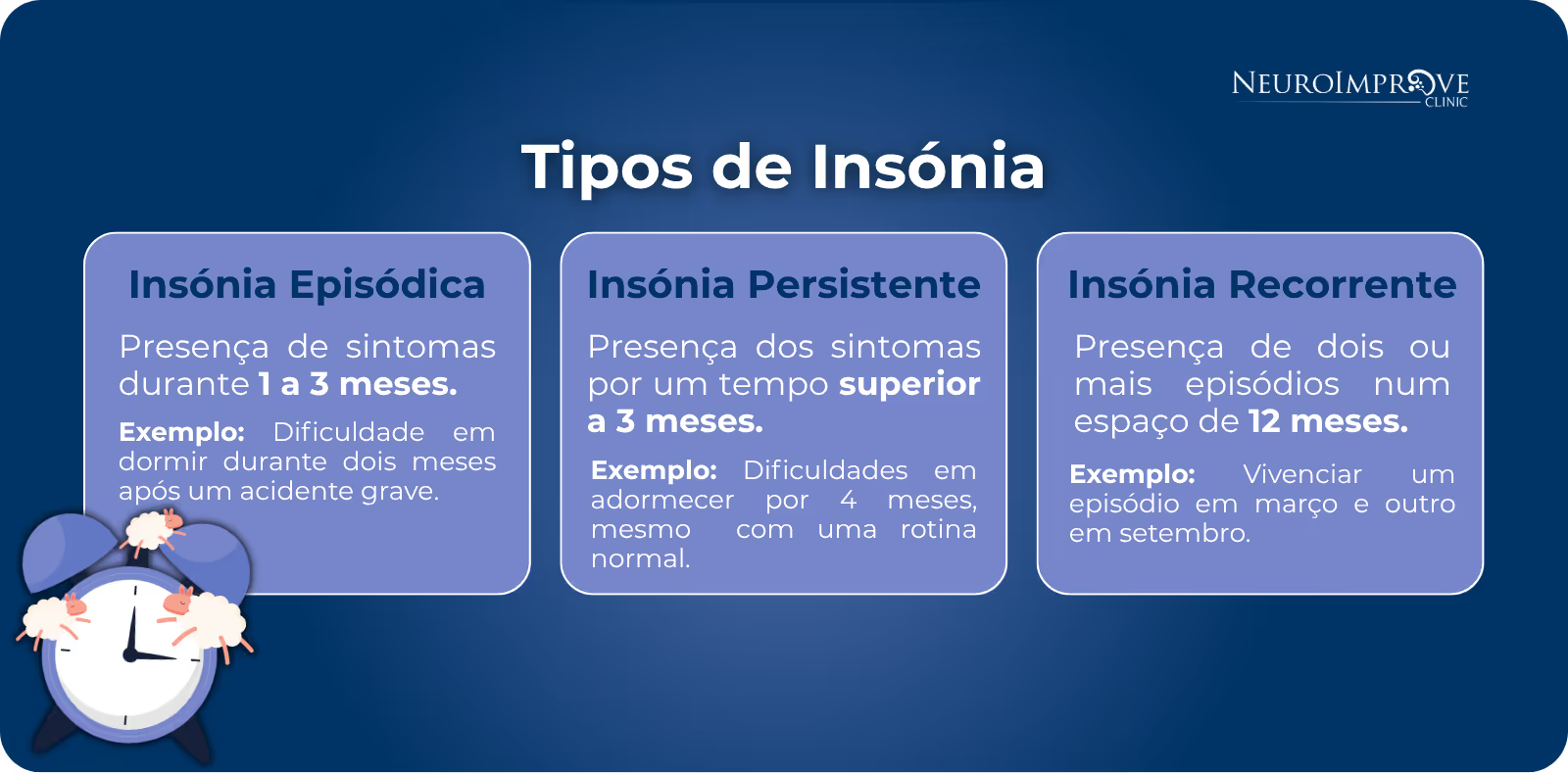
Data from DSM-5point out that we can distinguish 3 Types of Insomniaaccording to the frequency of episodes over time:
If in any way, you identify with the symptoms and frequencies described above, it is important that you seek professional help. Only then will you be able to find viable and effective solutions to restore the quality of sleep and give your body and mind the necessary rest.
What causes lack of sleep?
Insomnia can start for several reasons. Second or DSM-5,people who already have a predisposition to insomnia may develop it after experiencing stressful or traumatic events.
However, there are factors that contribute to its appearance and prolongation:
😫 Perpetuating factors
Some behaviors can increase difficulty falling asleep, such as bad bedtime habits, irregular sleep schedules and anxiety about difficulty sleeping (which end up aggravating the problem).
🌡️ Temperamental Factors
People who frequently experience anxious feelings, who tend to place excessive worries, and who suppress emotions are more vulnerable to insomnia.
💡 Environmental Factors
The surrounding environment greatly influences the quality of sleep and the ease (or, in this case, difficulty) of falling asleep. Noise, inadequate lighting, extreme temperatures (very high or very low) are factors that can make it difficult to sleep and consequently increase the risk of insomnia.
🧬 Genetic and physiological factors
Female gender, advanced age and family history are associated with a higher risk of insomnia.
Still within the physiological factors, studies prove that there are often insomnia in pregnancy,which may be related to variables such as: gestational age, trimester of pregnancy, symptoms of anxiety and depression, level of education and personality traits.
🔄 Habits
Practices and habits such as excessive consumption of caffeine, alcohol and irregular sleep schedules, are factors that greatly favor not only development but also persistenceof insomnia.
What to do when you have insomnia?
The answer lies in habits. In other words, to promote the quality of sleep and consequently avoid the emergence of major problems, such as insomnia, it is essential to eliminate habits or behaviors that contradict this objective.
A Portuguese Sleep Associationpoints out that, for good sleep hygiene, it is necessary avoid any type of medicationwhich is not prescribed by experts in the field.
In addition, it is important to adopt practices such as:
☑️ Limit sessions throughout the day.
☑️ Avoid ingestion of food and liquids before bedtime.
☑️ Give preference to drinks that no be energetic or caffeine-based.
☑️ Reduce or eliminate nicotine at night.
☑️ Keep the rest area free of stimulating activities such as work or intense reading.
☑️ Establish a fixed time to lie down and wake up (every day).
☑️ Diminish the brightness or activate the night mode of devices and screens (and avoid using them before sleeping).
☑️ The practice of exercise can be beneficial but it is important that it is not close to sleep time.
☑️ Implement relaxation techniques, such as hot baths or breathing techniques such as Diaphragmatic Breathingthat promote calm.
These are some guidelines to promote good sleep hygiene. However, if, even following these recommendations, you continue to feel:
- difficulty falling asleep,
- I am not very restorative or
- tiredness present daily
Camel consult a professionalso that it is possible to intervene in a way that is most appropriate to your situation.
⚠️ It is even more important than do not self-medicate. Taking medication on your own can even make the problem worse. You should use medication or supplementation only with the advice of a professional who will be aware of the origin of your insomnia.
Isonias and PHDA: can they be related?
Studies published in Frontiers in Psychiatryreveal that Attention Deficit Hyperactivity Disorder (PHD) can occur simultaneously with Insonia.Stressing that:
👉 The severity of symptoms of PHDA is associated with the development of insomnia, directly affecting the quality of sleep.
👉 There is a greater development of insomnia disorder in people with unhealthy habits, such as use of devices before going to sleep(due to the blue light of the screens). Since people with PHDA have a greater tendency to resort to technology at night, which can increase the difficulty in falling asleep and consequently impair the quality of sleep.
👉 People with PHDA and Insomnia Disorder, despite having a inferior quality of life(both physically and mentally), may have improvements in intervening/treating insomnia.
✅ In short,adults with PHDA and Insomnia Disorder have:
- A more severe clinical picture due to the pronounced symptoms of PHDA.
- Greater comorbidities.
- Worse quality of life.
Thus, this study proves that in fact, both conditions can coexist and have a serious impact on the individual's life and that professional intervention is a key point for improving the quality of life.
How can we intervene in Insónias?
For the intervention and treatment of Insomnia Disorder, studies mention that the Cognitive-Behavioral Therapy for Insomnia is the first line of treatment.
At NeuroImprove, our approach is completely meticulous taking into account the needs of each client.
🧠 In this way, considering that the ability to fall asleep and stay in a deep sleep is the responsibility of certain areas of the brain, we start by performing a QEEG(Quantitative Eletroencephalogram). This allows assess the level of brain activity and identify possible dysregulations which may be causing disturbances in the sleep pattern.
After the dysregulations have been identified and an individualized treatment protocol has been established, the therapy of Neurofeedbackwill specifically stimulate these areas, making it possible to create healthier patterns of activity, both in situations of activity and rest.
💬 In turn, with the sessions of Clinical Psychology :
- Therapeutic objectives are defined for each case.
- The review of lifestyle, maladaptive habits and sleep hygiene is carried out.
- Emotional regulation is promoted.
👉 Our focus is on helping people, promoting their well-being and contributing to a more balanced life. If you feel that the quality of your sleep is a constant battle, we are here to support you through effective and personalized interventions.
References
Fadeuilhe C, Daigre C, Richarte V, Grau-López L, Palma-Álvarez RF, Corrales M and Ramos-Quiroga JA (2021) Insomnia Disorder in Adult Attention-Deficit/Hyperactivity Disorder Patients: Clinical, Comorbidity, and Treatment Correlates. Front. Psychiatry 12:663889. doi: 10.3389/fpsyt.2021.663889
Insomnia Disorder. (2013). Diagnostic and Statistical Manual of Mental Disorders Fifth Edition.
Miller, M. How can I maintain a healthy sleep? Portuguese Sleep Association. https://apsono.com/pt/noticias/noticias-do-sono/24-noticias/noticias-do-sono/407-como-posso-manter-um-sono-saudavel
Riemann, D., Baglioni, C., Bassetti, C., Bjorvatn, B., Dolenc Groselj, L., Ellis, J.G., Espie, C.A., Garcia-Borreguero, D., Gjerstad, M., Gonçalves, M., Hertenstein, E., Jansson-Fröjmark, M., Jennum, P. J., Leger, D., Nissen, C., Parrino, L., Paunio, T., Pevernagie, D., Verbraecken, J., Weeß, H.-G., Wichniak, A., Zavalko, I., Arnardottir, E.S., Deleanu, O.C., Strazisar, B., Zoetmulder, M. and Spiegelhalder, K. (2017), European guideline for the diagnosis and treatment of insomnia. J Sleep Res, 26:675-700. https://doi.org/10.1111/jsr.12594
Riemann, D., Benz, F., Dressle, R. J., Espie, C. A., Johann, A. F., Blanken, T. F., Leerssen, J., Wassing, R., Henry, A. L., Kyle, S. D., Spiegelhalder, K., & Van Someren, E. J. W. (2022). Insomnia disorder: State of science and challenges for the future. Journal of Sleep Research, 31 (4), e13604. https://doi.org/10.1111/jsr.13604
Salari, N., Darvishi, N., Khaledi-Paveh, B., Vaisi-Raygani, A., Jalali, R., Daneshkhah, A., Bartina, Y., & Mohammadi, M. (2021). A systematic review and meta-analysis of prevalence of insomnia in the third trimester of pregnancy. BMC Pregnancy and Childbirth, 21. https://doi.org/10.1186/s12884-021-03755-z.
Related Content


We Train Brains, Strengthen Minds, Transform Lives
Schedule an appointment and see how we can help.
No time for a call now? Leave your details and we will get in touch:

Wonderful team, concerned, attentive and always available to help in everything.
With the passage of time, the results are being verified.
I am grateful to have met Neuroimprove and all its professionals.