
Working Memory: What is it and how does it affect learning?


Working memory is like the “notepad” of our brain. 📝
It allows us to keep and manipulate information for short periods — like remembering a phone number while writing it down!
Although it seems simple, this function has a significant impact on learning, attention and thought organization, especially in individuals with Attention Deficit Hyperactivity Disorder(PHD).
In this article, you will understand what working memory is, how it acts in our lives and how difficulties in this area affect school, professional and emotional performance. ⬇️
What is Working Memory?
In simple terms, working memory is the system we use to temporarily store and manage informationwhile we perform mental tasks.
It differs from long-term memory because it is always “active”, helping us solve problems, make decisions and maintain focus. 🤓
According to psychologists and researchersAlan Baddeley and Graham Hitch, who popularized this concept, working memory is composed of subsystems such as the phonological lever, the visuo-spatial sketch, the episodic buffer and the central executive - each with a different function in information management:
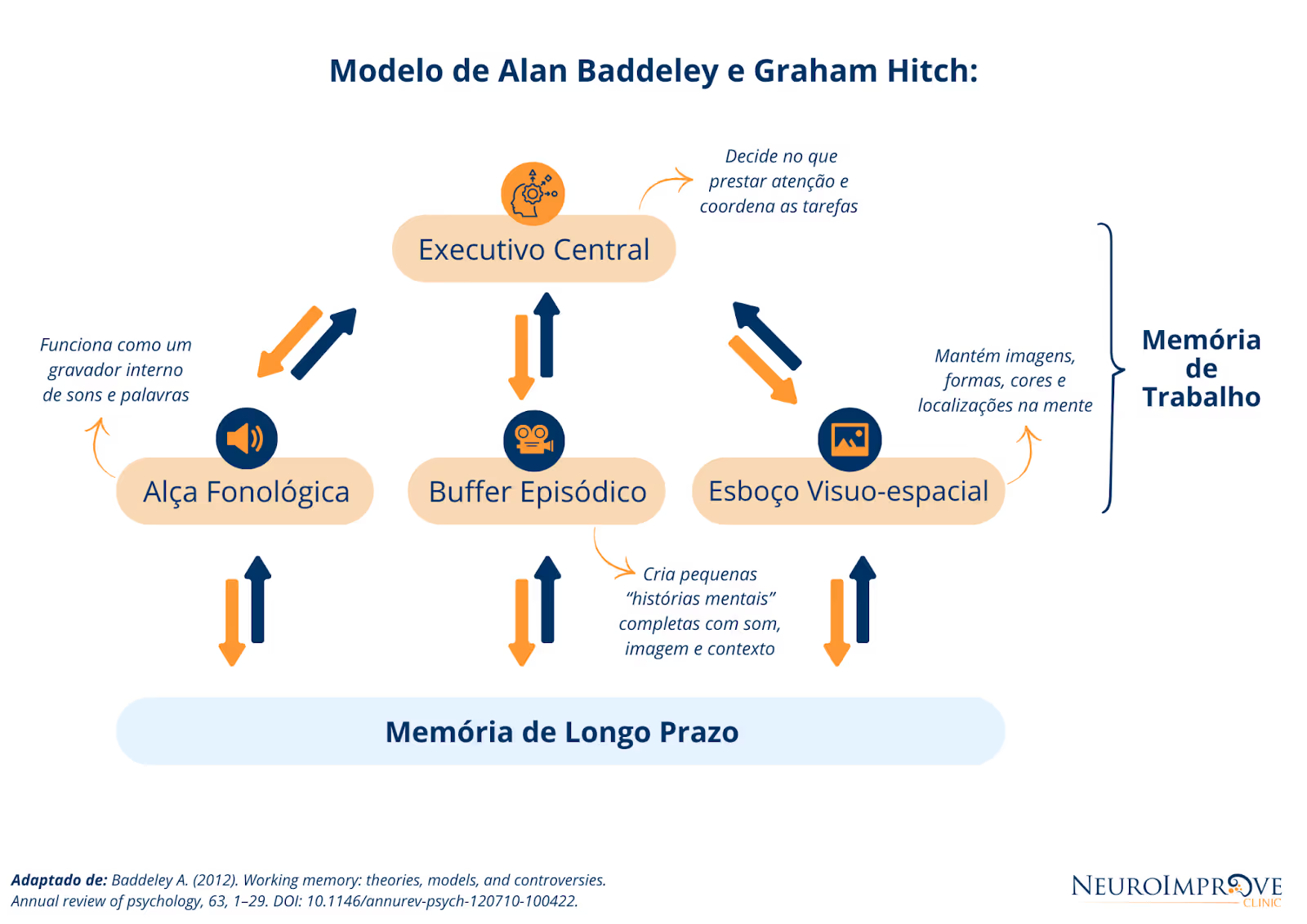
Practical examples of working memory
- Solve a mental calculation:Keep the numbers in mind while performing the operation.
- Follow instructions:“Go to the kitchen, get a glass and a doormat.”
- Read and understand:Recall what you just read to connect with the next paragraph.
- Participate in a debate:Listen to the argument of the other, process and respond logically.
In people with PHDA, it is common to have difficulty keeping this information active, which can generate frustration, forgetfulness and disorganization. 😓
Strategies to improve working memory
The good news is that working memory can be trained and supported! Here are some practical strategies:
- Use visual lists and reminders.
- Break complex tasks into short steps.
- Verbally repeat what you are going to do.
- Use support tools (agendas, applications, whiteboards).
- Reduce visual and auditory distractions.
- Establish consistent routines.
Para children with PHDA, these strategies must be practiced with patience, positive reinforcement and consistency.
The support of psychologists and other specialized professionals is also essential. 🧑 ⚕️
Why is working memory important in learning?
The working memory is one of the main executive functions of the brain, responsible for planning, organizing, managing time and maintaining focus — essential skills for effective learning.
Studies show that, even with an intelligence level within or above average, these people can face real obstacles in everyday life, such as difficulties in reading, writing, mathematics and oral comprehension.
And in the case of PHDA?
Individuals with PHDA tend to present specific deficits in working memory, affecting school and professional performance.
These deficits are not related to intelligence, but with the way the brain organizes and maintains information in the moment. 🧠
Common signs:
- Rapid forgetting of verbal instructions.
- Difficulty copying information from the board at school.
- Loss of reasoning during an explanation.
- Skipping steps in complex tasks.
See some practical examples in these 3 exclusive cartoon bands that we created to illustrate, in a light and fun way, how working memory manifests itself in the daily life of those living with PHDA:


Although often confused with disinterest, these difficulties reflect real cognitive challenges that require understanding and personalized strategies. 😊
Conclusion: working memory and quality of life
Working memory is more than a brain function; it is a bridge between what we know and what we can apply in the moment.
By understanding how it works — and why so many people with PHDA face challenges in this area on a daily basis —it is possible to transform the way we deal with learning, behaviour and emotional management!
➡️ If you have identified these signs in yourself or your child, schedule an evaluation with usor explore other articles about PHDA and brain training in our blog.
References
Baddeley A. (2012). Working memory: theories, models, and controversies. Annual review of psychology, 63, 1—29. https://doi.org/10.1146/annurev-psych-120710-100422
Ramos, A. A., Hamdan, A. C., & Machado, L. (2020). A meta-analysis on verbal working memory in children and adolescents with ADHD. The Clinical Neuropsychologist, 34 (5), 873—898. https://doi.org/10.1080/13854046.2019.1604998
Related Content


We Train Brains, Strengthen Minds, Transform Lives
Schedule an appointment and see how we can help.
No time for a call now? Leave your details and we will get in touch:

Wonderful team, concerned, attentive and always available to help in everything.
With the passage of time, the results are being verified.
I am grateful to have met Neuroimprove and all its professionals.