
ADHD and Video Games: Practical Tips for Healthy Boundaries


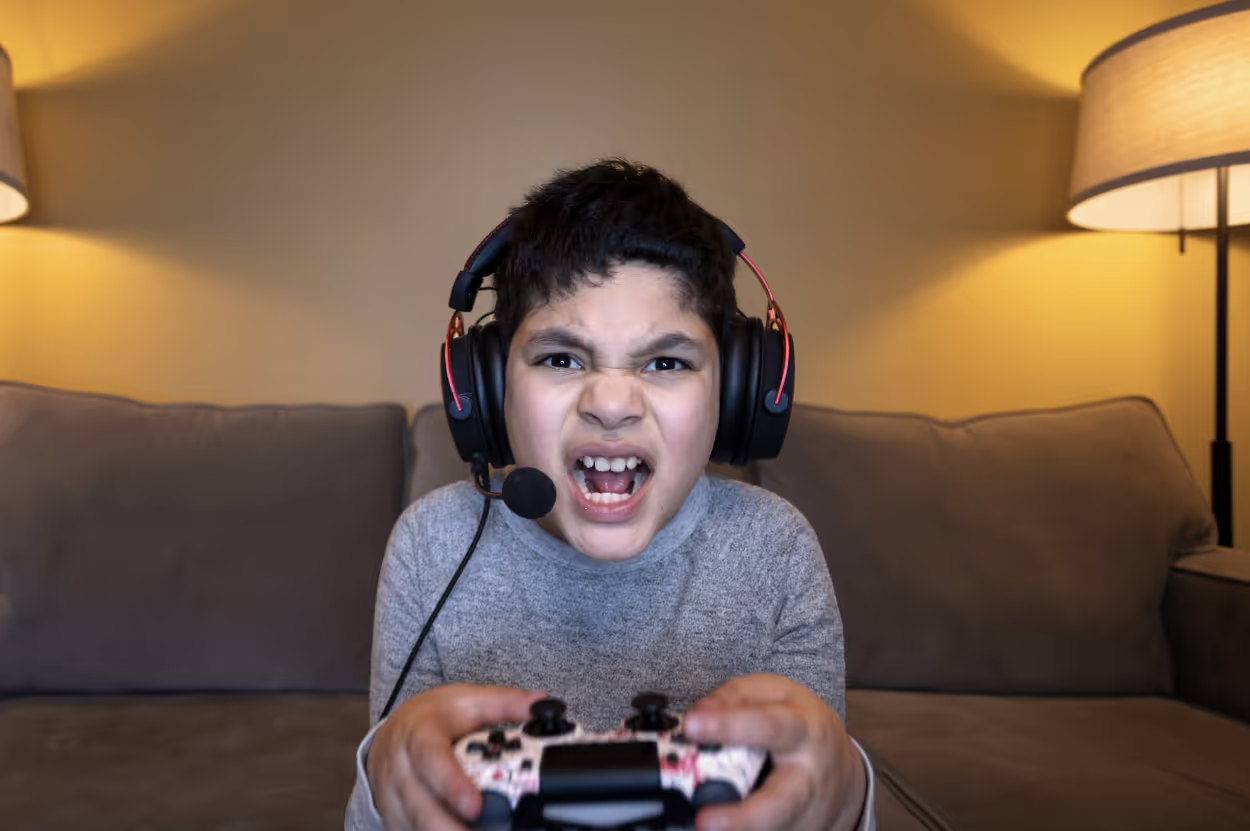
For many parents, finding a balance between screen time and other activities in a child's life with PHDcan be a constant challenge.
Bones videogames, with their quick stimuli and immediate rewards, are especially appealing to these children.
However, excessive use of any electronic game can aggravate the symptoms of PHDA, such as impulsivity and difficulty concentrating.
In this article, Let's explore 5 practical strategies to help establish healthy boundaries, ensuring that video games are a balanced part of the routine. ⚖️🎮
Strategy 1: Set schedules for the game
It is common for children with PHDAare attracted to video games because of their stimulating structure. For this reason, establishing specific hours to play is essential.
⏰ It is recommended that children under 2 years of age completely avoid the use of screens and that, for older children, screen time is limited to a maximum of 1 to 2 hours per day, in accordance with the guidelines of the World Health Organization.
Now imagine that every day, after classes and homework, there is time dedicated to the game. This helps the child to have a clear reward for fulfilling his responsibilities.
In other words, setting a schedule to play after finishing homework not only regulates screen time, but also reinforces the importance of prioritizing other tasks (and the sense of responsibility).
📌 Excessive video games can also make it difficult to transition from vacation to back to school - see more in our article with tips to go back to school without stress.
Strategy 2: Choose Appropriate Games
Not all games in the world of gaming are created equal, and choosing those who promote useful skills can make a difference.
For children with PHDA,it is beneficial to opt for games that require more than just quick reflexes— such as games involving strategy, problem solving or even creative activities.
Examples of video games for children with PHDA:
- Brawler games: Tetrise Portalare great for stimulating attention and focus. These games challenge the player to solve problems quickly and efficiently, improving concentration and problem-solving abilities.
- Platform games: Super Mariois a classic that continues to be fun and relevant. For more recent and challenging options, Hollow Knight, Cuphead, Ori and the Blind Foreste Celesteare excellent choices, requiring precision, motor coordination and quick thinking.
- Creative building games: Minecraftis an excellent example of a game that stimulates creativity and critical thinking. It allows children to explore and build whole worlds, while learning concepts of planning, problem solving, and even basic notions of geometry and physics.
- Complex simulators: The Sims is a classic of simulators, focused on managing virtual lives and making daily decisions. For more recent and challenging options, Rimworld e Factory offer experiences focused on resource management and strategic planning, requiring long-term thinking and complex problem solving, developing advanced cognitive skills.
- Games with motion controllers: Just Danceand experiences in Virtual Reality as in the game Beat Saberpromote motor coordination by combining physical movement with fun. These games encourage children to move while having fun.
- Math, science or language games: Big Brain Academye Eighthare designed to teach concepts of mathematics, science or language in an immersive way, keeping children interested and motivated during the game.
⚠️ Important Note:When choosing any of these games, it is essential to check the recommended age rating. Make sure the games are appropriate for the child's age, ensuring a safe and developmentally appropriate gaming experience.
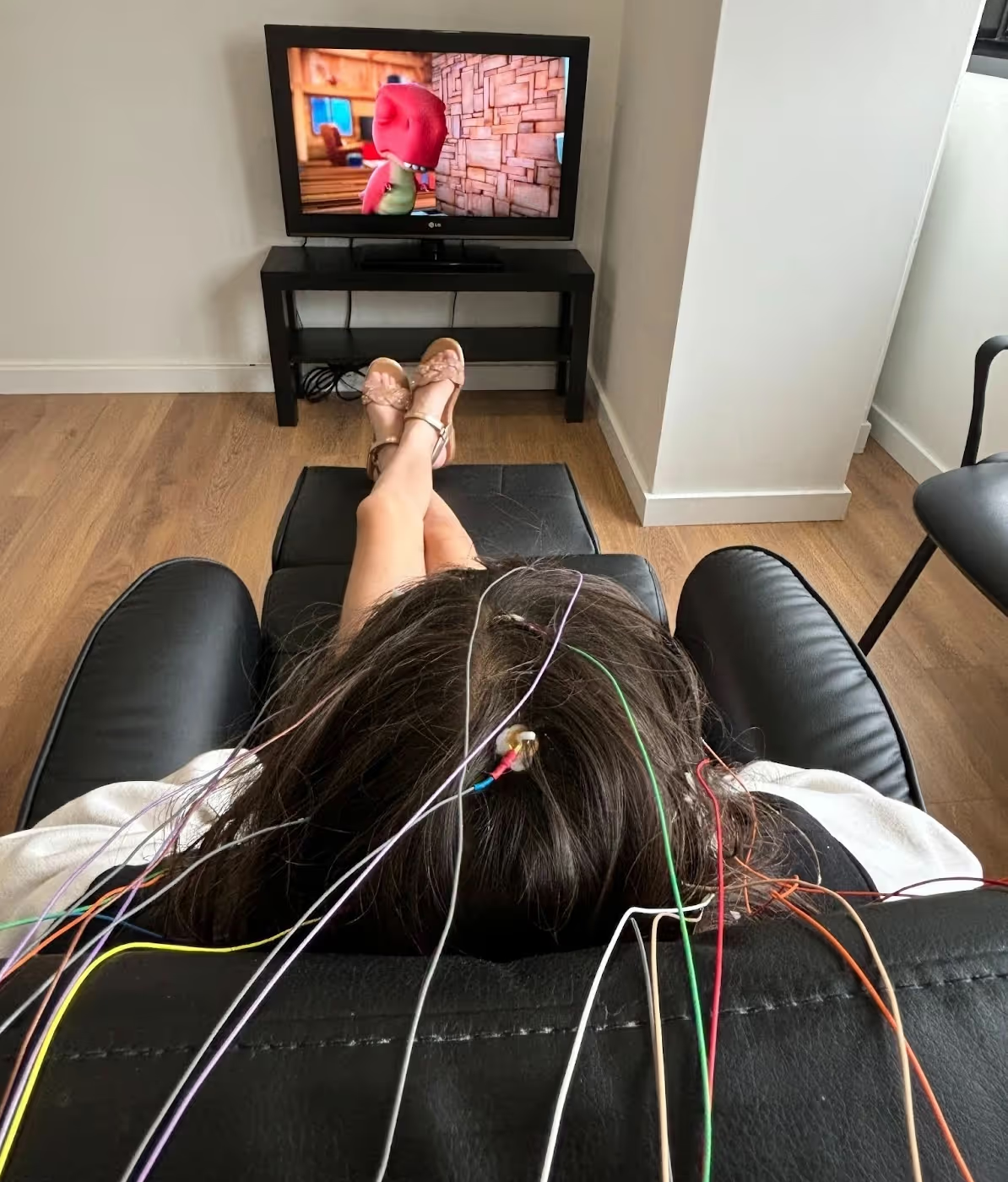
Remember: Each child is unique, so it is essential that parents choose and monitor the games in a personalized way and even consult professionals for appropriate recommendations.
Strategy 3: Promote alternative activities
It is essential that children with PHDA have a diverse range of activities.
Children with PHDA often have a lot of accumulated energy, which can be channeled into physical activities, for example.
Encourage involvement insports, arts or other manual activitiescan be an effective way to spend this accumulated energy and balance the time spent on screens. 🏃✏️🎨
In addition, participating in activities that require attention and focus, such as playing a musical instrument or reading, can also positively complement playing time.
Strategy 4: Involve the child in decisions
Involving the child in creating the rules for screen time can increase their adherence to these standards.
Openly discuss why to set boundaries and allow the child to participate in defining those boundariescan make her feel more responsible and understands the importance of balance.
Asking the child how long they think would be fair to play and then negotiate to reach a consensus can be an effective approach. 💬
This not only promotes self-regulation, but also reinforces the importance of balancing pleasure with other responsibilities.
Strategy 5: Monitor behavior
Observing how the child reacts to playtime is essential.
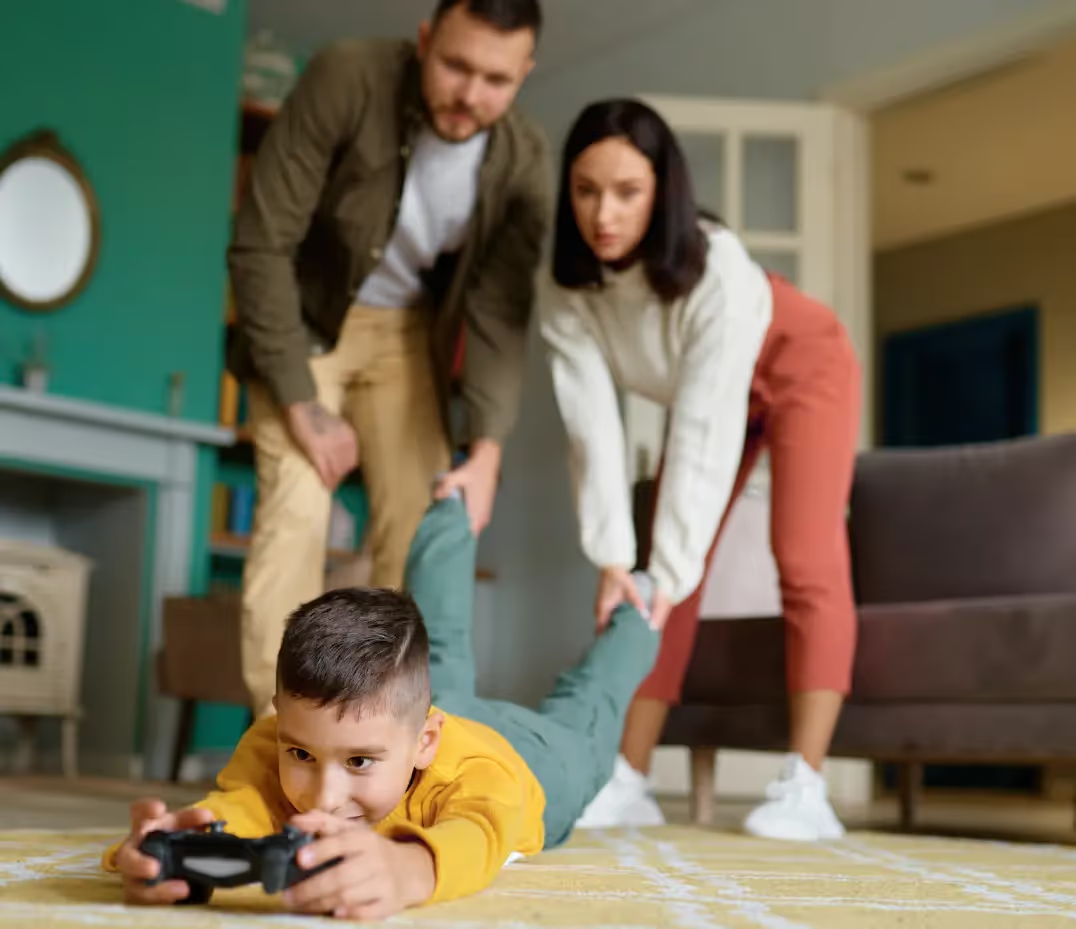
If you notice that the child becomes more agitated, irritated, or having difficulty transitioning to other activitiesafter playing, it can be a sign that the limits need to be adjusted. 👀
This constant monitoring allows parents to quickly realize when the balance is being lost.
For example, if a child shows resistance to stopping play or shows signs of dependence, it may be necessary to review the time allowed or introduce more frequent pauses during play sessions.
Video Games and PHDA: What Does Science Say?
👉 According to a study published in Frontiers in Pediatrics(2021), children with PHDA tend to spend more time playing videogames and to develop more additive behaviors compared to other children.
The study showed that the more severe the symptoms of PHDA, the greater the likelihood that children will spend hours playing games, which can aggravate problems such as impulsivity.
👉 On the other hand, a study published in JAMA Network Open(2022) found that playing video games can have a positive effect on children's cognitive functions, including improvements in working memory, attention, and reaction time.
However, the authors of the study emphasize that it is crucialmanage game time in a balanced wayto avoid potential negative impacts, especially in children with PHDA, so as not to worsen some symptoms such as difficulty maintaining attention.
Conclusion
While video games can have cognitive benefits, such as improvements in intelligence and problem solving, it is crucial that their use is carefully monitored.
Children with PHDA are more susceptible to developing additive behaviors and spending excessive time playing, which can aggravate symptoms such as impulsivity and difficulty concentrating.
If you need support managing your child's screen time or setting healthier routines, NeuroImprove Clinic is here to help. 🧠🌟
Schedule a consultationwith our experts and find out how we can support your child's healthy development!
References
COUNCIL ON COMMUNICATIONS AND MEDIA. Media Use in School-Aged Children and Adolescents. Pediatrics. 2016; 138 (5) :e20162592. doi: 10.1542/peds.2016-2592
Masi L, Abadie P, Herba C, Emond M, Gingras M-P, Ben Amor L. Video Games in ADHD and Non-ADHD Children: Modalities of Use and Association With ADHD Symptoms.Front Pediatrician.2021; 9:632272. doi: 10.3389/fped.2021.632272
WHO guidelines on physical activity, sedentary behaviour and sleep for children under 5 years of age. ISBN 978650020876-4
Rodrigo-Yanguas M, González-Tardón C, Bella-Fernández M, Blasco-Fontecilla H. Serious Video Games: Angels or Demons in Patients With Attention-Deficit Hyperactivity Disorder? The Quasi-Systematic Review. Front Psychiatry. 2022 Apr 27; 13:798480. doi: 10.3389/fpsyt.2022.798480.
Related Content


We Train Brains, Strengthen Minds, Transform Lives
Schedule an appointment and see how we can help.
No time for a call now? Leave your details and we will get in touch:

Wonderful team, concerned, attentive and always available to help in everything.
With the passage of time, the results are being verified.
I am grateful to have met Neuroimprove and all its professionals.